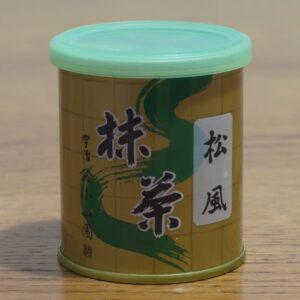
Is Yamamasa Koyamaen Matsukaze any good? I tried it as usucha at two different temperatures and then made a matcha latte with almond milk. And this matcha surprised me more than once.
Before proceeding to our Yamamasa Koyamaen Matsukaze review, I had read reviews describing it as bold, nutty and sometimes bitter.
So naturally, I expected some bitterness.
But my first bowl had none. Absolutely none that I could detect.
The following evening, I increased the water temperature by 10°C, and suddenly the bitterness appeared.
Then I made a matcha latte using 4g of Matsukaze, and the bitterness disappeared again.
Interesting, isn’t it?
Let’s start from the beginning.
What Is Yamamasa Koyamaen Matsukaze?
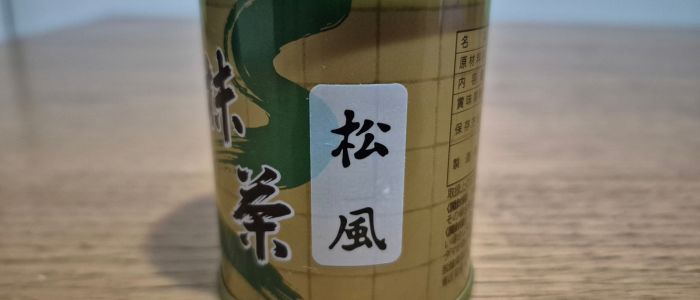
Matsukaze (松風), meaning “wind through the pines”, is a Japanese matcha from Yamamasa Koyamaen, an established tea producer based in Uji, Kyoto.
It’s one of the more accessible matcha in their range, commonly enjoyed as usucha (thin tea) or used in matcha lattes.
It isn’t marketed as their most prestigious matcha, but that doesn’t necessarily mean it isn’t worth drinking.
I’ve tasted expensive matcha that disappointed me and more affordable matcha that genuinely surprised me.
Price doesn’t tell the whole story.
So rather than judging Matsukaze by where it sits in Yamamasa Koyamaen’s range, I wanted to find out what it actually tastes like.
Opening the Tin: One Thing I Didn’t Expect
Let’s start with the packaging.
The Matsukaze tin arrived tightly sealed, with a silica gel desiccant packet inside to help protect the matcha from moisture.
So far, so good.
But the pouch inside was a different story.
It wasn’t sealed.
That caught my attention. The outer tin was sealed properly, but I would have preferred the matcha pouch to be sealed as well.
Now, let’s look at the powder.
The matcha appeared vibrant green.
And opening the tin, I was greeted by a pleasant, fresh, milky aroma.
Not particularly grassy or vegetal.
I liked the smell straight away.
But smelling matcha and drinking it are two different things.
So, how did it taste?
My First Matsukaze Usucha Tasting: 70°C
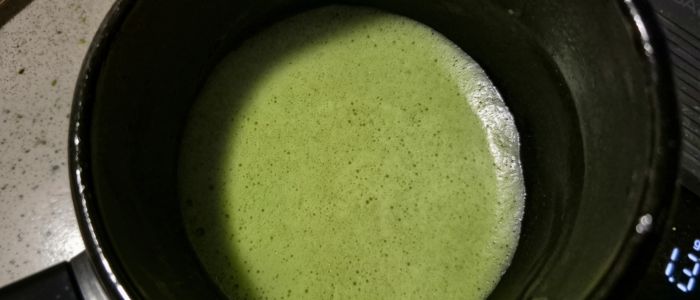
For the first tasting, I prepared Matsukaze as usucha.
No milk. No sugar. Nothing to hide behind.
Just matcha and water.
Preparation:
- 2g Matsukaze
- 60ml water
- 70°C
- Whisked as usucha
Once I added the water, the aroma changed.
I started picking up something that reminded me of chocolate.
Not sweet chocolate exactly, but a chocolate-like aroma that I wasn’t expecting.
And then came the first sip.
Wait, Where’s the Bitterness?
I expected Matsukaze to have some bitterness.
But I couldn’t detect any.
Not even a little.
The mouthfeel was lovely and creamy, which I rated 4 out of 5. The umami was noticeable but fairly moderate, around 3 out of 5.
There was also a little astringency, which left a slight drying sensation in my mouth.
I’d give that 2 out of 5.
Nothing unpleasant, just a bit of dryness.
But what really surprised me was the finish.
It had a refreshing citrusy tang.
The closest thing I can compare it to is a sharp, lemon-like note, but pleasantly refreshing rather than unpleasantly sour.
I wasn’t expecting that from Matsukaze.
Creamy, moderately savoury, slightly drying, with a refreshing citrus finish.
And no bitterness.
Not a bad first impression.
My First Usucha Tasting Scores
| Characteristic | Score |
|---|---|
| Bitterness | 0/5 |
| Astringency | 2/5 |
| Umami | 3/5 |
| Creaminess | 4/5 |
Dry aroma: Fresh and milky, without much vegetal character.
Wet aroma: Chocolate-like.
Finish: Bright, refreshing citrus tang.
I enjoyed that first bowl, but something was bothering me.
Why were other people describing Matsukaze as bitter when I couldn’t detect any?
I decided to try it again.
Second Usucha Tasting: What Happens at 80°C?
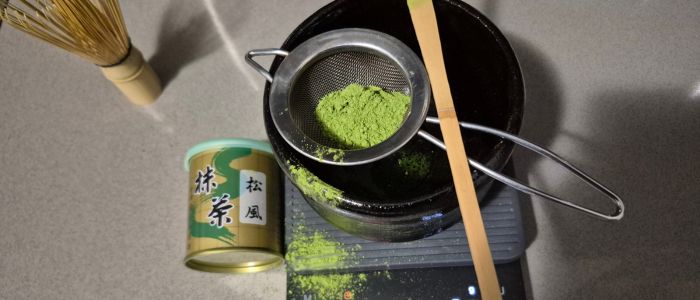
The following evening, I prepared another bowl.
Same matcha. Same amount of water.
But this time, I increased the water temperature to 80°C.
Well, almost the same amount of matcha.
I spilled a little on the scale, so we’ll call it 2g-ish.
Not exactly a laboratory-grade experiment, but the matcha survived.
Preparation:
- Approximately 2g Matsukaze
- 60ml water
- 80°C
- Whisked as usucha
Opening the tin, I noticed that same fresh, milky aroma.
But after adding the warmer water, I picked up more nuttiness.
There was also some fresh grassiness, although it was subdued by the nutty and milky notes.
It smelled really good.
And the taste?
Well, Matsukaze had a little more to say this time.
There It Is. Bitterness!
Remember how I couldn’t taste any bitterness at 70°C?
At 80°C, I certainly could.
The bitterness was more noticeable, but that wasn’t the only difference.
The nuttiness and umami were also more pronounced.
During my first tasting, those flavours were quite subtle. This time, they stood out much more.
The creaminess was still present, as was the slight astringency.
And that refreshing citrus finish?
Still there.
It was almost as though Matsukaze had turned up the volume.
Does Temperature Make a Difference?
Based on these two tastings, it certainly seemed to.
| Characteristic | 70°C | 80°C |
|---|---|---|
| Bitterness | None detected | Noticeable |
| Umami | Moderate | More pronounced |
| Nuttiness | Subtle | More pronounced |
| Creaminess | Pronounced | Still present |
| Astringency | Slight | Still present |
| Wet aroma | Chocolate-like | Nutty, milky, lightly grassy |
| Finish | Refreshing citrus | Crisp, refreshing citrus |
Of course, these were two separate tasting sessions, and my second measurement wasn’t perfectly precise.
I can’t say that temperature alone caused every difference.
But if you’re finding Matsukaze a little too bitter, it might be worth experimenting with a lower water temperature before deciding it isn’t for you.
Matsukaze Matcha Latte Review: Does It Taste Good With Almond Milk?
Now for the latte.
Matsukaze is often recommended for matcha lattes, so naturally I wanted to see how it performed with milk.
And rather than using the usual 2g, I decided to make this one a little stronger.
My matcha latte recipe:
- 4g Yamamasa Koyamaen Matsukaze
- 30ml water at 70°C
- 80ml So Good Original Almond Milk
That’s quite a matcha-forward ratio.
I wanted to know whether Matsukaze’s flavour would remain noticeable with milk added.
After whisking the matcha, I poured it into the almond milk and gave everything a swirl.
And the result?
Still No Bitterness!
Despite using 4g of Matsukaze, I couldn’t detect any bitterness in the latte.
None.
Remember, my second usucha tasting at 80°C had noticeable bitterness.
But here, with almond milk and a lower water temperature, I wasn’t getting that bitter sensation.
The astringency was also less noticeable than when I drank Matsukaze straight, although there was still a little dryness.
The umami remained moderate.
It didn’t suddenly become an intensely savoury matcha just because I’d doubled the amount.
But the creaminess?
That was the standout.
The matcha and almond milk combination was wonderfully creamy.
I already enjoyed Matsukaze’s creamy mouthfeel when drinking it as usucha, but as a latte, the creamy character was even more noticeable to me.
And I liked that.
I didn’t add any sweetener, so this was simply Matsukaze with water and So Good Original Almond Milk.
Did the Almond Milk Mask the Matcha?
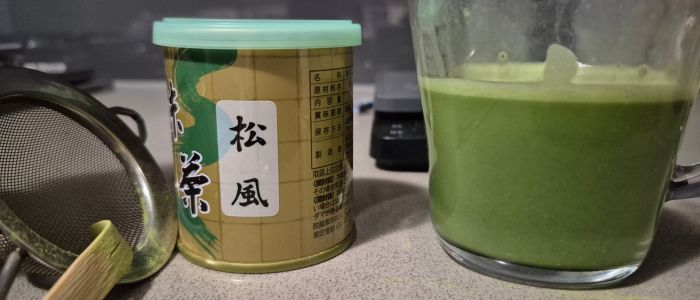
One of my frustrations with matcha lattes is when the milk completely takes over.
You add your matcha, prepare everything nicely, take a sip…
And all you taste is milk.
Not exactly what you were hoping for when you’ve just used a generous amount of Japanese matcha.
In this particular tasting, what stood out most was the creaminess, moderate umami, reduced astringency and lack of bitterness.
I haven’t given Matsukaze a separate intensity score for how strongly its flavour cut through the almond milk, so I won’t pretend I measured that.
What I can say is that I enjoyed the creamy character of this preparation.
And using 4g with just 80ml of milk gave me a fairly concentrated matcha latte.
For anyone trying the same recipe, remember that using more milk could give you a different result.
Usucha vs Latte: Which Did I Prefer?
It’s a difficult comparison because I enjoyed different things about each preparation.
At 70°C as usucha, Matsukaze surprised me with its smoothness, chocolate-like aroma and refreshing citrus finish.
At 80°C, it became more intense, with greater bitterness, nuttiness and umami.
And as an almond milk latte, the creaminess really stood out.
Here’s how I would summarise all three tastings:
| Usucha 70°C | Usucha 80°C | Almond Milk Latte | |
|---|---|---|---|
| Matcha | 2g | Approximately 2g | 4g |
| Water | 60ml | 60ml | 30ml |
| Milk | None | None | 80ml |
| Bitterness | None detected | Noticeable | None detected |
| Umami | Moderate | More pronounced | Moderate |
| Astringency | Slight | Present | Reduced, but still some dryness |
| Creaminess | High | Still present | Very noticeable |
| Citrus finish | Refreshing | Still present | Not specifically noted |
If I wanted to explore Matsukaze’s aroma and individual flavours, I’d drink it as usucha.
If I wanted something creamy, the almond milk latte would be a very tempting option.
And if I wanted something stronger and more assertive, I’d go with the 80°C usucha.
What Do Other People Say About Yamamasa Koyamaen Matsukaze?
Here’s where things get interesting.
Not everyone agrees about Matsukaze.
Some reviewers describe it as bold, nutty and bitter.
Others say it’s relatively smooth, creamy and enjoyable as an everyday matcha.
Looking through customer reviews on Sazen Tea, I found people who preferred Matsukaze with milk because they found it bitter when prepared straight.
But I also found people who enjoyed it as usucha and described a smooth, creamy character.
My own tasting experiences fall somewhere between those descriptions.
At 70°C, I understood why some people found Matsukaze gentle.
At 80°C, I started to understand why others described it as stronger and more bitter.
And in my almond milk latte, the bitterness wasn’t noticeable at all.
I also found seller descriptions mentioning chocolate and citrus-related notes.
That was interesting because I’d picked up a chocolate-like aroma and a refreshing lemon-like finish in my own usucha tasting.
Of course, that doesn’t mean everyone will taste the same things.
Your preparation, personal preferences and even the milk you choose can change the experience.
If anything, the different reviews make me appreciate why it’s worth tasting matcha for yourself.
A Quick Word About Matsukaze’s Colour
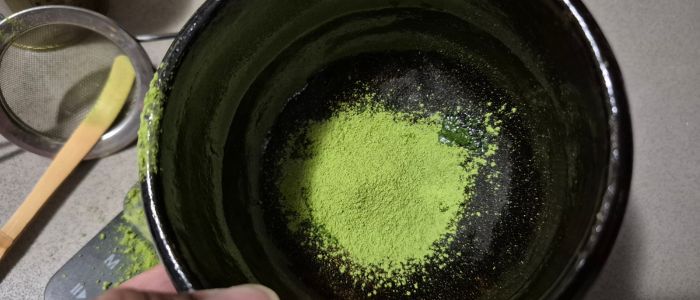
For anyone wondering about the colour, the powder looked vibrant green in my first video.
In person, I would describe it as a lighter green.
And yes, the photos were taken on my phone without filters or colour editing.
I know the colour police can get pretty serious about matcha.
But personally, I think colour is only one part of the picture.
I want to know how the matcha smells, how it tastes and whether I actually enjoy drinking it.
A beautiful shade of green is nice.
A beautiful shade of green that tastes terrible?
Not quite as exciting.
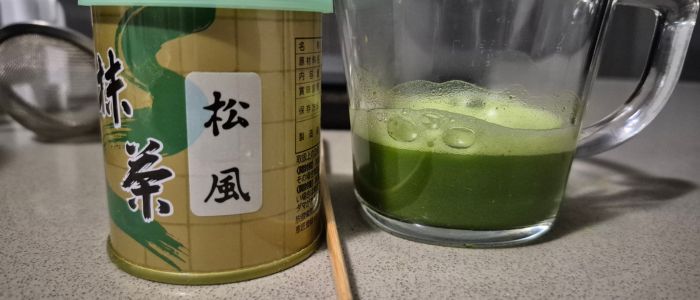
In saying that, here’s Matsukaze’s colour as an usucha in a clear glass cup:
Why I Didn’t Pair It With Dessert
During my second usucha tasting, I was actually planning to have dessert with my matcha.
Sounds like a lovely combination, doesn’t it?
But I decided against it.
I wanted to understand Matsukaze’s flavour without something sweet influencing what I was tasting.
If you’re trying to work out whether a matcha has natural sweetness, bitterness or interesting finishing notes, dessert might not be the best companion during the actual taste test.
There’ll be plenty of opportunities for dessert later.
Trust me, I’m not giving up dessert.
My Final Verdict: Is Yamamasa Koyamaen Matsukaze Worth Buying?
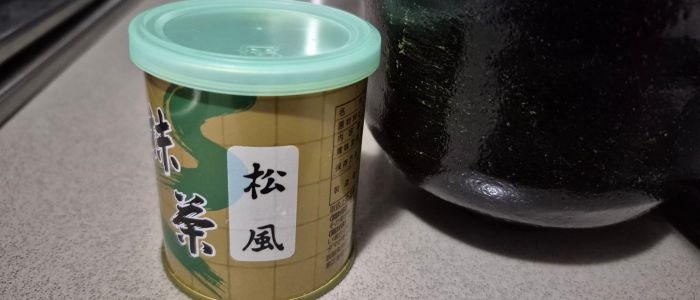
After three different preparations, I can say that I enjoyed Matsukaze.
Not because it was the sweetest or most umami-rich matcha I’ve tasted.
It wasn’t.
What I enjoyed was how differently it presented itself depending on the preparation.
At 70°C, I found it creamy, smooth and free from detectable bitterness, with a refreshing citrus finish.
At 80°C, the bitterness, nuttiness and umami became more pronounced.
And in a latte made with So Good Original Almond Milk, the creaminess stood out even more, while the bitterness disappeared again.
If you’re looking for an everyday Japanese matcha that can be enjoyed traditionally or with milk, I think Matsukaze is worth considering.
I’d especially recommend experimenting with water temperature before deciding how you feel about it.
For me, the creamy mouthfeel was the most consistent quality across all three preparations.
And that unexpected citrus finish when drinking it as usucha was a lovely surprise.
Would I drink it again?
Absolutely.
Although next time, I’ll try not to spill any on the scale.
Where to Buy Yamamasa Koyamaen Matsukaze in Australia
We stock Yamamasa Koyamaen Matsukaze 30g at UJIHA.
If you’re deciding between Yamamasa Koyamaen’s different matcha, you can also read our Matsukaze vs Samidori vs Ogurayama comparison.
Disclosure: UJIHA sells Yamamasa Koyamaen Matsukaze. This review is based on my own tasting experiences, including the things I enjoyed and the things I noticed could be improved.
And now I’m curious.
Have you tried Matsukaze? Did you find it bitter, creamy, nutty or something completely different?
I’d love to know how you prepared yours and what you thought of it.