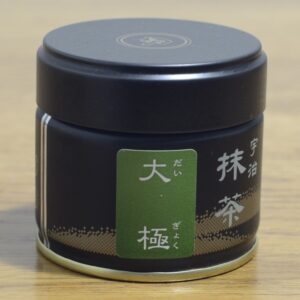
This is definitely the page to keep because of its existing GSC performance, but I would rewrite most of it.
The current answer is buried under jokes and old UJIHA positioning. More importantly, it repeatedly treats ceremonial grade as an official quality grade. We now know that’s not how we want UJIHA to explain matcha.
The searcher wants a very simple answer immediately:
Yes, you can use ceremonial grade matcha for baking. But you usually don’t need to.
Here’s the version I’d publish, with the sources checked.
Can I Use Ceremonial Grade Matcha for Baking?
Yes. You can absolutely use ceremonial grade matcha for baking.
There’s nothing about matcha labelled “ceremonial grade” that prevents you from using it in cakes, cookies, brownies, cheesecakes or other desserts.
The bigger question is whether it’s worth using a more expensive matcha in a recipe.
For many baked goods, probably not.
Butter, sugar, flour, chocolate and other ingredients can cover some of the subtle flavours you might notice when drinking matcha with water. A less expensive matcha with a stronger flavour may actually work better in some recipes.
But if ceremonial grade matcha is what you already have at home, use it.
Good matcha doesn’t become the wrong matcha just because you put it in a cake.
What Does Ceremonial Grade Mean?
Before deciding whether to bake with ceremonial grade matcha, it’s worth understanding what the term actually means.
“Ceremonial grade” isn’t part of a standardised Japanese matcha grading system.
It’s a commercial term commonly used by sellers to describe matcha positioned for drinking, particularly matcha intended to be whisked with water.
ABC Australia has also reported that terms such as ceremonial, premium and culinary aren’t governed by a standardised matcha grading system. (ABC News)
That means there’s no universal rule saying:
Ceremonial grade = drinking only
and
Culinary grade = cooking only
They’re useful shopping descriptions, but they’re not rules about what you can do with the tea.
Read our guide to What Does Ceremonial Grade Matcha Mean? for a deeper explanation.
Is Matcha Traditionally Used for Baking?
Matcha itself has a much longer history than matcha cakes and cookies.
Japan’s Ministry of Agriculture, Forestry and Fisheries explains that matcha developed alongside Japanese tea ceremony culture. Matcha is produced by grinding tencha into fine powder. (Ministry of Ag, Forestry & Fisheries)
But matcha isn’t limited to the tea bowl today.
MAFF has also documented the growing use of matcha in confectionery and cooking. (Ministry of Ag, Forestry & Fisheries)
So using matcha in desserts isn’t somehow disrespectful to the tea.
It’s simply another way of enjoying it.
What Is Matcha Made From?
Understanding this also helps clear up some of the confusing “grade” terminology.
MAFF defines matcha through its relationship with tencha.
Tea plants intended for tencha are grown under covered conditions. The harvested leaves are steamed and dried without the rolling process used for teas such as sencha. Stems and leaf veins are removed, producing tencha, which can then be ground into fine powder to make matcha. (Ministry of Ag, Forestry & Fisheries)
That’s a much more concrete definition than whether a retailer puts “ceremonial” or “culinary” on the packet.
Ceremonial Grade vs Culinary Grade for Baking
For baking, the biggest practical difference is often cost and flavour.
Matcha sold specifically for culinary use is generally positioned for mixing with other ingredients.
That can make sense.
In a recipe containing sugar, butter, cream, chocolate or flour, delicate characteristics can become harder to notice. A stronger matcha can sometimes remain more noticeable in the finished dessert.
Ceremonial-labelled matcha is commonly positioned for drinking with water, where subtle differences in aroma, sweetness, umami, bitterness and astringency are easier to experience.
But again, there’s no official boundary preventing one from being used for the other.
Use a less expensive matcha when:
You’re making a strongly flavoured cake, cookie or brownie.
You’re baking a large batch.
The recipe contains lots of sugar, chocolate or other strong ingredients.
You want noticeable matcha flavour without using a large amount of expensive tea.
Consider using your better matcha when:
Matcha is the main flavour.
The recipe uses relatively simple ingredients.
You’re making something where the tea isn’t heavily cooked.
You already have the matcha open and want to use it.
Or simply because you prefer its flavour.
Does Ceremonial Grade Matcha Make Baking Taste Better?
Not automatically.
More expensive doesn’t always mean better for a particular recipe.
Imagine two matchas.
One is delicate, creamy and subtle when whisked with water.
The other has a stronger tea flavour with more bitterness.
You might prefer the first as usucha but discover that the second is much easier to taste once it’s mixed into a sweet cake batter.
That doesn’t make the second tea “better.”
It means it works better for that job.
This is why we think choosing matcha by how you’re going to use it and how it tastes is more helpful than choosing entirely by a grade printed on the packet.
Will Baking Destroy Good Matcha?
Heat will change food, and matcha is no exception.
Baking exposes matcha to much higher temperatures than you’d normally use when preparing it as a drink.
The final flavour and colour will also be affected by the other ingredients and the baking process.
That’s another reason you may not want to use your most expensive matcha in a cake.
You’re paying for characteristics that may be much easier to appreciate when the tea is prepared with water.
But that doesn’t mean you can’t bake with it.
Will Ceremonial Grade Matcha Make Cakes Greener?
Not necessarily.
Don’t assume that the words ceremonial grade guarantee a particular colour.
Matcha colour can vary because of cultivation, cultivar, processing, age and storage.
Covered cultivation is an important part of tencha production, and MAFF notes that shading tea plants affects characteristics including colour and umami. (Ministry of Ag, Forestry & Fisheries)
But a bright green powder isn’t proof of an official ceremonial grade.
Your finished cake’s colour will also depend on the recipe and baking conditions.
How Much Matcha Should You Use for Baking?
There isn’t one correct amount.
It depends on:
The matcha
The recipe
The serving size
The other flavours
How strong you want the matcha flavour
A delicate matcha may require a different amount from a stronger one.
For that reason, I’d follow a tested recipe first rather than assuming every matcha powder behaves identically.
Once you’ve made the recipe once, you can adjust the amount according to your taste.
Should You Sift Matcha for Baking?
Usually, yes.
Matcha powder can form small clumps.
Sifting it before incorporating it into dry ingredients can make it easier to distribute throughout a batter or mixture.
You can also mix the sifted matcha thoroughly with other dry ingredients before combining them with the wet ingredients.
This helps avoid concentrated pockets of matcha in the finished dessert.
What Flavours Go Well With Matcha in Baking?
Matcha works particularly well with ingredients that either complement its vegetal and umami characteristics or balance its bitterness.
Popular combinations include:
White chocolate
Vanilla
Strawberry
Red bean
Cream
Coconut
Sesame
Citrus
You don’t necessarily need lots of additional flavours, though.
If you’re spending more on an interesting matcha, a simpler recipe may allow more of its character to remain noticeable.
What Can You Bake With Matcha?
Matcha can be used in all sorts of desserts and baked goods, including:
- Matcha cookies
- Matcha cheesecake
- Matcha brownies
- Matcha muffins
- Matcha sponge cake
- Matcha madeleines
- Matcha shortbread
- Matcha bread
- Matcha cupcakes
- Matcha tiramisu
ABC Australia, for example, has published a matcha tiramisu recipe where matcha’s bitterness is balanced by creamy and sweet ingredients. (ABC News)
Is Culinary Matcha Low Quality?
Not necessarily.
“Culinary grade” is also commercial terminology.
A matcha marketed for culinary use may simply have been selected or positioned for cooking and baking.
What matters is whether it works for what you’re making.
A matcha with a stronger flavour might be less enjoyable to you as usucha but excellent inside a cake.
That isn’t a failure of the tea.
It’s choosing the right flavour for the job.
Can I Use Ceremonial Grade Matcha for Cookies?
Yes.
There’s nothing stopping you from using it in cookies.
However, if you’re using lots of butter, sugar, chocolate or other strong flavours, consider whether you’re getting enough benefit from an expensive matcha to justify the cost.
For everyday matcha cookies, I’d generally choose a matcha that gives you a noticeable tea flavour at a sensible price.
Can I Use Ceremonial Grade Matcha for Cheesecake?
Yes.
Cheesecake can actually be an interesting use because matcha pairs well with creamy flavours.
Again, you don’t necessarily need your most expensive matcha.
If you already own one and enjoy its flavour, though, there’s no reason you can’t use it.
Can I Use Ceremonial Grade Matcha for a Matcha Latte?
Yes.
The same principle applies.
You don’t have to save good matcha exclusively for water.
Some delicate teas may lose part of their character behind milk, while others work beautifully in a latte.
If you enjoy your favourite matcha with milk, drink it that way.
Explore our Matcha for Lattes collection if that’s how you normally prepare your matcha.
Is Baking With Expensive Matcha a Waste?
Only if you think it is.
From a value perspective, I’d usually save an expensive, delicate matcha for preparations where I can clearly taste what I paid for.
But that’s a preference, not a rule.
Maybe you have a matcha that’s approaching the end of its best drinking period.
Maybe you opened something you don’t particularly enjoy as usucha.
Maybe you’re making a special dessert.
Or maybe you simply want the best matcha in your cheesecake.
Use it.
There’s no matcha police coming for your cake.
Frequently Asked Questions
Can I use ceremonial grade matcha for baking?
Yes. Ceremonial-labelled matcha can be used for cakes, cookies, brownies, cheesecake and other recipes. You may simply be paying more for subtle characteristics that become harder to notice after baking.
Is culinary grade matcha better for baking?
It can be a better value and may have a stronger flavour that remains noticeable alongside other ingredients. But there’s no universal rule requiring culinary-labelled matcha for baking.
Does ceremonial matcha taste better in baking?
Not necessarily. A stronger, less delicate matcha may actually stand out better in some recipes.
Can I use expensive matcha for baking?
Yes. Whether it’s worth the cost depends on the recipe and what you value.
Can I bake with matcha I normally use for usucha?
Absolutely.
Can I use ceremonial grade matcha for cookies?
Yes.
Can I use ceremonial grade matcha for cheesecake?
Yes.
Does matcha need to be sifted before baking?
Sifting can help break up clumps and distribute the powder more evenly through your recipe.
Is culinary matcha fake matcha?
No. “Culinary grade” is generally a commercial description of intended use, not a statement that the product isn’t matcha.
So, Should You Bake With Ceremonial Grade Matcha?
Yes, if you want to.
But you don’t need to spend more just because you think ceremonial grade will automatically produce a better cake.
For most baking, I’d choose matcha based on:
Flavour. Strength. Freshness. Price. And the recipe you’re making.
Save your delicate matcha for usucha if that’s where you enjoy it most.
Put it in a latte if that’s what you love.
Bake it into cheesecake if that’s what sounds good tonight.
We tell you about the tea. You decide how to use it.
Official and Authoritative Sources
Japan Ministry of Agriculture, Forestry and Fisheries: Uji Tea
MAFF explains tencha and matcha production, covered cultivation and matcha’s relationship with Japanese tea culture. (Ministry of Ag, Forestry & Fisheries)
Japan Ministry of Agriculture, Forestry and Fisheries: Types of Green Tea
MAFF explains that tencha is produced from covered tea leaves that are steamed and dried without rolling, and that grinding tencha into fine powder produces matcha. (Ministry of Ag, Forestry & Fisheries)
ABC Australia: Understanding Matcha Grades
ABC’s explainer discusses the lack of a standardised ceremonial, premium and culinary matcha grading system. (ABC News)