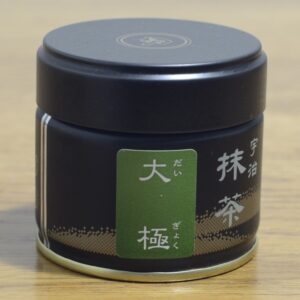
This one needs a heavy rewrite, but we should preserve the URL and core search intent because it is already averaging position 7.69.
The most useful correction is the calorie number. Japan’s official food composition database lists matcha powder at 237 kcal per 100 g. That works out to about 2.4 calories per 1 g and 4.7 calories per 2 g. (Food Database)
So rather than saying “about 3 calories” without a source, we can give readers an official figure and explain why their packet may show something slightly different.
Ceremonial Grade Matcha Calories: How Many Calories Are in Matcha?
If you’re drinking matcha and counting calories, the good news is simple: plain matcha contains very few calories in a normal serving.
According to Japan’s official Standard Tables of Food Composition, matcha powder contains 237 calories per 100 grams. (Food Database)
That works out to approximately:
| Matcha powder | Approx. calories |
|---|---|
| 1 g | 2.4 kcal |
| 2 g | 4.7 kcal |
| 3 g | 7.1 kcal |
| 4 g | 9.5 kcal |
For a typical bowl prepared with around 2 grams of matcha and water, you’re therefore looking at roughly 5 calories from the matcha itself.
The important part is what you add to it.
Water adds no calories. Milk, sugar, honey, syrups and other ingredients can turn a roughly 5-calorie bowl of matcha into a drink containing considerably more.
Does Ceremonial Grade Matcha Have Calories?
Yes.
Matcha is powdered tea leaf, and the powder itself contains energy.
Unlike brewed green tea, where the leaves are steeped and then removed, matcha is consumed as a powder.
Japan’s Ministry of Agriculture, Forestry and Fisheries explains that matcha is produced by grinding tencha into a fine powder. (Ministry of Ag, Forestry & Fisheries)
That distinction matters when comparing the nutritional values of matcha powder with a cup of brewed tea.
How Many Calories Are in 1 Gram of Matcha?
Using the Japanese food composition figure of 237 kcal per 100 g, 1 gram of matcha contains approximately 2.4 calories. (Food Database)
So if you use:
1 g matcha: about 2.4 calories
2 g matcha: about 4.7 calories
3 g matcha: about 7.1 calories
These are useful reference figures rather than a replacement for the nutrition information supplied with a particular product.
Different products may have somewhat different nutritional values, so check the packaging if you need the exact number for the matcha you’re drinking.
How Many Calories Are in 2 Grams of Matcha?
Approximately 4.7 calories, based on the Japanese Standard Tables of Food Composition. (Food Database)
Two grams is also a useful starting quantity for preparing matcha with water at home.
So if you whisk 2 g of matcha with nothing but water, the drink itself remains very low in calories.
Does Ceremonial Grade Have Fewer Calories Than Other Matcha?
There isn’t a standard calorie value specifically for ceremonial grade matcha.
That’s because “ceremonial grade” isn’t a standardised Japanese nutritional or quality classification.
It’s a commercial term commonly used to describe matcha positioned for drinking, particularly with water.
So you shouldn’t assume that a matcha labelled ceremonial grade has fewer calories than one labelled premium or culinary grade simply because of the wording on the packet.
If calories matter to you, look at the nutrition information for the actual product.
For more on the terminology, read our guide to What Does Ceremonial Grade Matcha Mean?
Matcha Powder vs Brewed Green Tea
This is where comparing matcha with ordinary green tea becomes interesting.
With conventional brewed green tea, you steep the leaves in water and then remove them.
With matcha, you’re drinking the powdered tea itself.
MAFF describes matcha as tencha that has been ground into powder, while Japan’s official food composition database lists the nutritional composition of the powder itself. (Ministry of Ag, Forestry & Fisheries)
This is why it doesn’t make much sense to compare 100 g of matcha powder directly with 100 g of prepared green tea.
Nobody is drinking 100 grams of matcha powder at once.
A normal serving uses only a few grams.
What Is Actually in Matcha Powder?
Calories aren’t the only thing in the powder.
Japan’s food composition database reports that matcha powder contains protein, fat, carbohydrates and dietary fibre. For example, its current tables list 29.6 g protein, 5.3 g fat and 38.5 g total dietary fibre per 100 g of matcha powder. (Food Database)
Again, those numbers are for 100 grams.
A normal serving is only a tiny fraction of that amount, so don’t read the 100 g nutrition table as though those are the amounts you’re getting in one bowl.
Does Water Add Calories to Matcha?
No.
If you prepare matcha simply with matcha powder and water, the calories come from the matcha powder.
Adding more water changes the concentration and volume of your drink, but it doesn’t increase its calorie content.
So:
2 g matcha + 60 ml water
and
2 g matcha + 100 ml water
contain essentially the same calories from matcha.
The second drink is simply more diluted.
How Many Calories Are in a Matcha Latte?
This is where the answer changes significantly.
The matcha itself might contribute only around 5 calories if you’re using 2 g.
But a matcha latte can also contain:
Milk
Plant-based milk
Sugar
Honey
Flavoured syrup
Cream
The calorie content of the finished latte therefore depends much more on the milk, serving size and sweeteners than on the few grams of matcha.
For example, two cafés could both sell a “matcha latte” while serving drinks with very different calorie counts because they use different milk, quantities and sweeteners.
If you’re tracking calories closely, check the nutritional information for the milk and sweetener you’re actually using rather than relying on a generic matcha-latte number.
Does an Iced Matcha Latte Have Fewer Calories?
Not necessarily.
Ice itself doesn’t add calories.
But an iced matcha latte isn’t automatically lower in calories than a hot matcha latte.
It depends on how much milk and sweetener are used.
A large iced latte with sweetened milk and syrup could contain considerably more calories than a small unsweetened hot latte, regardless of the ice.
Does Sugar Change Matcha’s Calories?
Yes.
Plain matcha is low in calories because you’re consuming only a small amount of powder.
Once you add sugar, honey or syrup, those ingredients contribute their own calories.
This means that if your goal is simply to keep the drink relatively low in calories, the easiest preparation is also the simplest:
matcha + water.
But that doesn’t mean you have to drink it that way.
If you enjoy your matcha with milk or something sweet, that’s simply part of the finished drink.
Is Matcha Good for Weight Loss Because It Is Low in Calories?
This is where I’d be careful.
Plain matcha is a low-calorie drink when prepared with water, but that doesn’t make matcha a weight-loss product.
Replacing a higher-calorie drink with unsweetened matcha could reduce your overall calorie intake, depending on the rest of your diet. That’s different from claiming matcha itself causes meaningful weight loss.
We wouldn’t recommend choosing matcha because of promises that it will “burn fat” or dramatically increase your metabolism.
Choose it because you enjoy drinking it.
Is Ceremonial Grade Matcha Healthier?
The word ceremonial doesn’t make a matcha inherently healthier.
Ceremonial grade is commercial terminology. It doesn’t create a separate nutritional category of matcha.
Similarly, a higher price doesn’t automatically mean fewer calories or more nutrients.
When comparing matcha, we’d rather look at useful information such as:
Producer
Origin
Cultivar
Harvest
Growing method
Flavour
How you intend to prepare it
Those tell you considerably more about the tea than assuming everything labelled ceremonial shares the same characteristics.
Is Matcha High in Sugar?
Plain matcha powder is not the same thing as a sweetened matcha drink.
Japan’s food composition database lists 1.5 g of sucrose per 100 g of matcha powder. At a normal serving of only a few grams, that represents a very small amount. (Food Database)
But a commercial matcha latte powder can be different.
Some premixed products contain matcha alongside sugar, milk powder or other ingredients.
So check the ingredient list.
Pure matcha should not be confused with a sweetened matcha drink mix.
Frequently Asked Questions
How many calories are in ceremonial grade matcha?
There isn’t a separate official calorie value for “ceremonial grade.” Japan’s food composition database lists matcha powder at 237 kcal per 100 g, which works out to approximately 2.4 calories per gram. (Food Database)
How many calories are in 2 grams of matcha?
Approximately 4.7 calories, using the Japanese food composition figure as a reference. (Food Database)
Does matcha with water have calories?
Yes, but very few in a normal serving. The water contributes no calories, while the matcha powder does.
Does a matcha latte have more calories?
Usually, because milk and any added sugar, honey or syrup contribute additional calories.
Does ceremonial grade have fewer calories than culinary matcha?
You shouldn’t assume so based on the grade terminology. Check the nutritional information for the specific product.
Is matcha calorie-free?
No. Matcha powder contains calories. The amount is simply very small when you’re using only a few grams.
Is matcha low calorie?
When prepared with water and without sweeteners, yes. A typical few-gram serving contains only a small number of calories.
The Bottom Line
So, how many calories are in ceremonial grade matcha?
There isn’t a special calorie count for ceremonial grade.
Using Japan’s official food composition data for matcha powder:
1 g = about 2.4 calories
2 g = about 4.7 calories
3 g = about 7.1 calories
For most people drinking plain matcha, the matcha itself contributes very few calories.
If you’re making a latte, the bigger nutritional difference will usually come from what you add to the matcha, especially milk and sweeteners.
And when choosing matcha, don’t let a calorie number or the word ceremonial decide everything for you.
Choose the tea you enjoy, then drink it the way you like.
Official Sources and Further Reading
Ministry of Education, Culture, Sports, Science and Technology, Japan: Standard Tables of Food Composition, Matcha
Japan’s official food composition database provides nutritional data for matcha powder, including energy, protein, fat, carbohydrates and dietary fibre. (Food Database)
Japanese Food Composition Database: Matcha
Ministry of Agriculture, Forestry and Fisheries, Japan: Uji Tea
MAFF explains how tencha is cultivated and processed into matcha and provides background on matcha’s relationship with Japanese tea culture. (Ministry of Ag, Forestry & Fisheries)