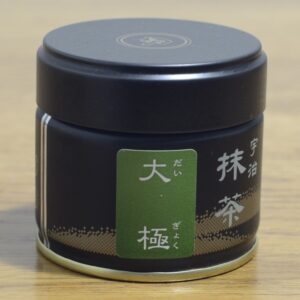
Uji matcha is Japanese matcha associated with the historic tea-producing region of Uji in Kyoto Prefecture.
Uji is one of the best-known names in Japanese tea. Its long tea history, specialist producers and surrounding growing areas have made Uji particularly well known among matcha drinkers.
But there is an important distinction:
Uji is an origin, not a grade.
The word Uji doesn’t automatically tell you how good a matcha will taste, whether it’s organic, which cultivar was used, when it was harvested, or whether you’ll personally enjoy it.
Understanding that makes it much easier to choose Uji matcha based on the tea itself rather than the name alone.
Where Is Uji?
Uji is a city in Kyoto Prefecture, south of Kyoto City.
The history of tea in the area goes back centuries. Japan’s Ministry of Agriculture, Forestry and Fisheries documents Uji’s important role in the development of Japanese tea cultivation and processing.
MAFF: History and Culture of Uji Tea
When people talk about Uji tea today, however, the term is more complicated than simply meaning tea leaves grown within the boundaries of Uji City.
The wider Uji tea-producing tradition includes tea-growing areas across southern Kyoto Prefecture.
One of the most important of these is Wazuka.
Is Wazuka Matcha Uji Matcha?
Wazuka is a tea-producing town in southern Kyoto Prefecture and an important production area for Uji tea.
Kyoto Prefecture’s own material identifies Wazuka as a major producer of Uji green tea.
Kyoto Prefecture: Uji Tea and Wazuka
This is why you may encounter matcha where Uji is used as the broader tea identity while Wazuka provides more specific information about where the tea was grown.
At UJIHA, we think that extra detail matters.
For example, our own organic collection includes matcha produced by Nakai Organic Tea Garden in Wazuka, Kyoto.
Giving you the specific producer and growing area tells you considerably more than simply putting “Uji matcha” on the front of a packet.
Why Is Uji Famous for Matcha?
Uji’s reputation for tea developed over centuries.
Tea cultivation in the region became closely connected with the development of Japanese tea culture and important methods of producing high-quality tea.
MAFF’s history of Uji tea describes the development of tea cultivation in Uji, the growth of covered cultivation and the evolution of tea-processing methods associated with the region.
That history remains important today.
Kyoto is home to tea-growing communities as well as established Japanese tea producers and tea houses with generations of experience growing, selecting, processing and blending tea.
But history doesn’t mean every Uji matcha tastes the same.
Far from it.
What Does Uji Matcha Taste Like?
There isn’t one flavour that all Uji matcha has.
Depending on the particular tea, you might experience:
- Deep umami
- Gentle sweetness
- Vegetal notes
- Creaminess
- Freshness
- Astringency
- Bitterness
- Different aromas and finishes
One Uji matcha might be incredibly creamy and rich.
Another might be brighter and more refreshing.
Another may have noticeable bitterness or astringency.
That’s part of what makes exploring matcha interesting.
Rather than expecting every Uji matcha to taste a particular way, look at the producer, cultivar, harvest, growing method and intended preparation.
If you’d like to understand these flavours more deeply, read our guide to What Does Matcha Taste Like?
Is Uji Matcha Better Than Other Matcha?
Not automatically.
Uji has an extraordinary reputation for tea, but geographic origin alone doesn’t determine whether you’ll enjoy a particular matcha.
Excellent Japanese matcha can also come from other tea-growing areas.
And within Uji’s wider tea-producing region, individual teas can vary considerably.
Quality and flavour can be influenced by several factors.
Cultivar: Different tea cultivars can produce different flavour and aroma characteristics.
Growing conditions: Weather, soil, field location and cultivation decisions can affect the tea.
Shading: Tea intended for tencha is grown under shade before harvest, although methods and timing can vary.
Harvest: First harvest and later harvests aren’t the same thing, and the leaves selected can influence the finished tea.
Processing: How the harvested leaves are processed into tencha matters.
Blending: Japanese tea producers may intentionally combine different teas to create a particular flavour profile.
Grinding: Tencha is milled into the fine powder we recognise as matcha.
Freshness and storage: Matcha can deteriorate when exposed to heat, oxygen, moisture and light.
Producer skill: Growing the tea is only one part of creating the finished matcha.
So at UJIHA, we treat Uji as useful provenance information, not a guarantee of superiority.
How Is Uji Matcha Made?
Matcha begins with tea plants grown for the production of tencha.
Before harvest, the tea plants are shaded. Covered cultivation has an important place in the history and production of Uji tea.
After harvesting, leaves intended for tencha are steamed to stop oxidation and then processed and dried. Tencha is eventually milled into the fine powder we know as matcha.
You can read more about Kyoto’s tea cultivation and production through the Kyoto Prefecture Tea Research Institute.
Kyoto Prefecture Tea Research Institute
The exact cultivation, harvesting, processing, blending and milling methods can vary between producers.
That’s why we don’t think it’s helpful to describe one production method as though every Uji matcha is made exactly the same way.
What Cultivars Are Used for Uji Matcha?
Matcha isn’t a cultivar.
It’s a type of tea.
Different tea cultivars can be grown and processed into tencha, which can then be milled into matcha.
Kyoto has several cultivars closely connected with its tea production.
The Kyoto Prefecture Tea Research Institute documents cultivars including Samidori and Uji Hikari for tencha, while cultivars such as Gokou are also strongly associated with Kyoto’s covered-tea production.
[Source: Kyoto Prefecture Tea Research Institute: Uji Tea Cultivars]
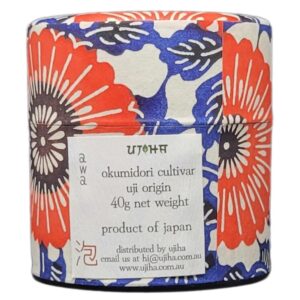
You may also encounter cultivars such as Okumidori, which is grown in multiple Japanese tea-producing regions and can be used for matcha.
Cultivar gives you another piece of the tea’s story.
But just like Uji itself, a cultivar name isn’t a quality grade.
Is Uji Matcha Always First Harvest?
No.
Uji describes geographic provenance.
First harvest, or ichibancha, describes harvest timing.
They’re different pieces of information.
A matcha can be associated with the Uji tea-producing region without being first harvest.
Likewise, first-harvest matcha can be produced in other Japanese tea-growing regions.
If harvest matters to you, look for that information separately rather than assuming that anything labelled Uji must be first harvest.
Read our guide to What Is First Harvest Matcha? if you’d like to understand ichibancha in more detail.
Is Uji Matcha Organic?
Some is.
Some isn’t.
Again, these terms tell you different things.
Uji = origin
Organic = farming and certification
A conventionally grown Uji matcha can be excellent.
A certified organic Uji matcha can also be excellent.
Organic certification shouldn’t be treated as a flavour or quality grade.
In Japan, organic agricultural products are covered by the Organic JAS system. If organic farming is important to you, look for recognised certification on the particular product rather than assuming that Uji matcha is organic.
[Source: MAFF: Japanese Agricultural Standards and Organic JAS]
You can also explore our Organic Matcha collection.
Does Uji Matcha Have Pesticides?
Uji matcha isn’t automatically pesticide-free.
Conventionally grown Japanese tea may be produced using agricultural chemicals permitted for tea cultivation, while certified organic tea operates under additional organic production requirements.
Japan regulates agricultural chemical residues in food through its residue standards and Positive List System.
If pesticide use is something you’re concerned about, we’ve covered the subject separately in Does Matcha Have Pesticides?
The important distinction here is simple:
Uji tells you about origin. It doesn’t tell you whether a tea is organic or how it was cultivated.
Does Uji Matcha Have Caffeine?
Yes.
Matcha naturally contains caffeine.
However, there isn’t one caffeine level that applies to every Uji matcha.
The amount in your drink can vary depending on the tea and, importantly, how much matcha powder you use.
If caffeine is important to you, read our guide to Matcha Caffeine Content rather than assuming Uji matcha contains a particular fixed amount.
Is Uji Matcha Ceremonial Grade?
You may see Uji matcha marketed as “ceremonial grade,” particularly outside Japan.
But Uji and ceremonial grade don’t mean the same thing.
Uji describes origin.
Ceremonial grade is a commercial term commonly used for matcha marketed for drinking with water.
It isn’t an official regulated Japanese matcha grade.
A more useful way to choose matcha is to look at the actual tea: producer, origin, cultivar, harvest, growing method, flavour and recommended preparation.
Read our guide to What Does Ceremonial Grade Mean? for a deeper explanation.
Can You Use Uji Matcha for Lattes?
Absolutely.
Uji matcha doesn’t have to be reserved for drinking with water.
Some teas may have subtle characteristics that are easier to notice when prepared as usucha. Others have enough character to remain noticeable through milk.
But how you drink your matcha is ultimately your choice.
If a beautiful first-harvest Uji matcha makes your favourite iced latte, there’s nothing wrong with drinking it that way.
For matcha we’ve specifically selected with milk in mind, explore our Matcha for Lattes collection.
Can You Drink Uji Matcha as Usucha?
Yes.
Many Japanese matchas can be enjoyed as usucha, where matcha is whisked with water.
A common starting point at home is around 2 grams of matcha with 60 to 80 ml of water at approximately 70 to 80°C.
From there, adjust the amount of matcha, water and temperature according to the particular tea and your own taste.
Usucha is particularly useful when exploring different matchas because there’s no milk or other ingredient changing the flavour of the tea.
What About Koicha?
Koicha is a much more concentrated preparation of matcha using more powder and less water.
Not every matcha is equally enjoyable prepared this way.
If you’re specifically looking for matcha for koicha, pay attention to the producer’s recommendation and the individual tea rather than assuming every expensive Uji matcha is suitable.
How Can You Tell If Uji Matcha Is Authentic?
Don’t rely on colour alone.
Bright green matcha isn’t proof of Uji origin.
Neither are words such as “premium,” “ceremonial” or “traditional.”
Instead, look for useful provenance information:
Where was the tea grown?
Who produced it?
Where was it processed?
Does the seller identify the Japanese producer or tea house?
Is the cultivar provided where known?
Is the harvest provided where known?
If it’s marketed as organic, is certification information provided?
The more information you’re given about the tea, the less you have to rely on marketing language.
At UJIHA, this is one reason we’re moving towards telling you more about the actual producers behind the matcha we sell.
Is Expensive Uji Matcha Always Better?
No.
Price can reflect many things, including production costs, scarcity, harvest, cultivar, producer reputation, packaging, exchange rates and supply.
A more expensive matcha may be exceptional.
But price doesn’t guarantee that you’ll prefer it.
The best matcha for you might simply be the one whose flavour suits how you actually drink matcha.
That’s why choosing matcha shouldn’t just mean finding the most expensive tin available.
Uji Matcha vs Matcha from Other Parts of Japan
Uji is one of Japan’s most famous tea-producing areas, but it isn’t the only place producing matcha.
Japanese tea is grown across multiple prefectures and regions.
Different regions, cultivars and producers can create very different experiences in the cup.
Rather than treating this as:
Uji = good
Everywhere else = inferior
we think it’s much more interesting to explore those differences.
Origin gives you another way to understand your tea.
It shouldn’t close the door on everything outside that origin.
Uji Matcha in Australia
Australian matcha drinkers now have access to matcha from a range of Japanese producers.
At UJIHA, we’re building a collection that allows you to explore both our own matcha and matcha from established Japanese tea producers.
Our own organic collection includes matcha produced in Wazuka, Kyoto, while our wider range gives you the opportunity to explore different Japanese producers, cultivars and styles.
We stock our matcha here in Australia rather than requiring you to order each tea separately from Japan.
Whether you make usucha, koicha, a hot latte or an iced matcha latte, we’d rather help you understand the tea than tell you there’s only one correct way to enjoy it.
Frequently Asked Questions
What does Uji mean in matcha?
Uji refers to the historic Japanese tea-producing area associated with Uji in Kyoto Prefecture.
It describes geographic provenance rather than a matcha grade.
Is Uji matcha Japanese?
Yes. Uji is in Kyoto Prefecture, Japan.
Is Uji matcha the best matcha?
There isn’t an objective “best” matcha based purely on origin.
Uji has an exceptional tea history and reputation, but the individual producer, cultivar, harvest, processing and your personal taste all matter.
Is Uji matcha bitter?
It can be.
Uji matcha isn’t automatically sweet or free from bitterness. The flavour depends on the particular tea and how you prepare it.
Is Uji matcha good for lattes?
It can be excellent in lattes.
Whether a particular Uji matcha works well with milk depends on its flavour profile and what you personally enjoy.
Is Wazuka in Uji?
Wazuka is a town in Kyoto Prefecture and an important production area for Uji tea.
When buying matcha, specific information such as Wazuka, producer and cultivar can tell you more about the tea than the word Uji alone.
Is Uji matcha organic?
Some is and some isn’t.
Uji describes origin, while organic describes a farming and certification system.
Is Uji matcha first harvest?
Not necessarily.
Uji describes origin, while first harvest describes harvest timing.
Does Uji matcha contain caffeine?
Yes.
Matcha naturally contains caffeine, although the amount in your drink can vary depending on the tea and how much powder you use.
Does Uji matcha have pesticides?
It can be conventionally or organically grown.
The word Uji doesn’t tell you whether pesticides were used. Japan regulates pesticide residues in food, and certified organic Japanese tea operates under additional organic production requirements.
Uji Is an Origin, Not a Guarantee
Uji deserves its reputation as one of the most important names in Japanese tea.
Its history and tea culture are a major part of the story of matcha.
But the word Uji shouldn’t have to do all the work.
Look at the producer.
Look at the specific origin.
Look at the cultivar and harvest when they’re available.
Look at how the tea was grown and how the producer recommends preparing it.
Then taste it.
Because ultimately, the most useful question isn’t:
“Does this say Uji on the packet?”
It’s:
“Do I enjoy what’s in my cup?”
For UJIHA, that’s the better way to explore Japanese matcha.
Official Sources and Further Reading
For readers who want to explore the history, production and standards behind Uji tea further, these are useful official Japanese sources.
Japan Ministry of Agriculture, Forestry and Fisheries: Uji Tea History and Culture
Background on the history and development of Uji tea in Japan.
MAFF: Uji Tea History and Culture
Kyoto Prefecture: Uji Tea and Wazuka
Information from Kyoto Prefecture about tea production in the Yamashiro region, including Wazuka’s role in Uji tea production.
Kyoto Prefecture: Uji Tea and Wazuka
Kyoto Prefecture Tea Research Institute
Official information and research relating to Kyoto tea production and tea cultivars.
Kyoto Prefecture Tea Research Institute
Japan Ministry of Agriculture, Forestry and Fisheries: JAS
Official information about Japanese Agricultural Standards, including Japan’s Organic JAS system.
MAFF: Japanese Agricultural Standards (JAS)