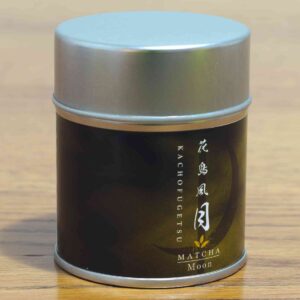
Ceremonial grade matcha can taste subtly sweet, but don’t expect it to taste sweet like sugar, honey or a sweetened matcha latte.
And importantly:
The words “ceremonial grade” don’t guarantee that a matcha will taste sweet.
Matcha can have a combination of:
umami
sweetness
bitterness
astringency
vegetal flavours
and many other aromas and flavours.
Some matcha has noticeable natural sweetness.
Some has almost none.
Some balances sweetness and umami with a little bitterness.
That’s part of what makes tasting different matchas interesting.
What Does Sweet Matcha Actually Taste Like?
When tea drinkers describe matcha as sweet, they usually aren’t saying it tastes like someone added sugar.
It’s more subtle.
You might notice sweetness:
at the beginning of the sip
underneath the umami
as bitterness fades
or lingering in the finish.
Depending on the tea, people may describe that sweetness as creamy, soft, rounded or even slightly confectionery.
But these are sensory descriptions.
They don’t mean the matcha has been sweetened.
Pure matcha is simply powdered tea.
Does Ceremonial Grade Matcha Contain Sugar?
Pure matcha naturally contains only a very small amount of sugar.
Japan’s official Standard Tables of Food Composition list matcha powder at approximately 1.5 g of sucrose per 100 g of matcha.
Source:
https://fooddb.mext.go.jp/details/details.pl?ITEM_NO=16_16035_7&MODE=7
A normal serving uses only a few grams of powder.
So when someone describes matcha as naturally sweet, they’re mainly describing how the tea tastes, not saying you’re drinking something comparable to a sweetened beverage.
That’s very different from a matcha latte made with syrup or a premixed matcha product containing added sugar.
Is All Ceremonial Grade Matcha Sweet?
No.
This is where the term ceremonial grade can create unrealistic expectations.
Ceremonial grade isn’t a standardised Japanese matcha grade.
ABC Australia has reported that common labels such as ceremonial, premium and culinary aren’t governed by a standardised grading system.
Source:
https://www.abc.net.au/asia/understanding-the-difference-between-matcha-qualities/105012604
So there is no official requirement saying ceremonial-grade matcha must have a particular level of sweetness.
The label also doesn’t guarantee:
first harvest
a particular cultivar
Uji origin
organic certification
zero bitterness
high umami
or a specific flavour profile.
Two matchas carrying the same ceremonial label can taste completely different.
Why Can Some Matcha Taste Sweeter Than Others?
Matcha flavour develops from a combination of factors rather than one simple grade.
These can include:
Cultivar
Different tea cultivars can produce different sensory characteristics.
Cultivation
How the tea was grown affects its chemical composition and eventual flavour.
Shading
Tea grown for tencha is cultivated under shade before harvest.
Harvest
Harvest timing can affect the character of the tea, although first harvest doesn’t automatically mean sweet.
Processing
How the leaves become tencha and how that tencha is later processed and milled can affect the final matcha.
Producer
Different producers make different decisions about cultivation, processing, selection and blending.
Preparation
Your water temperature, matcha concentration and water-to-matcha ratio can significantly change what you taste.
That’s why it’s more useful to look at the actual tea than simply ask what grade is printed on the packet.
What Does Shading Have to Do With Matcha Flavour?
Shading is an important part of producing tencha, the tea used to make matcha.
Japan’s Ministry of Agriculture, Forestry and Fisheries explains that covered cultivation reduces sunlight and suppresses the conversion of theanine into catechins.
MAFF connects the retention of theanine with the umami character associated with covered teas such as gyokuro and tencha.
Source:
https://www.maff.go.jp/e/policies/market/dento_syoku/menu/uzi_tea.html
But that doesn’t mean:
shaded = automatically sweet
or
more shading = automatically better matcha.
It’s one part of a much larger production process.
Is Umami the Same as Sweetness?
No.
They can appear together, but they’re different taste sensations.
Sweetness is sweet.
Umami is savoury.
A good matcha may have both.
This distinction matters because matcha descriptions sometimes use words such as sweet, creamy and umami almost interchangeably.
You might taste strong umami in a matcha without finding it particularly sweet.
Another matcha might have gentle umami with more noticeable sweetness.
Neither is automatically better.
Should Ceremonial Grade Matcha Be Bitter?
Matcha can have bitterness.
That’s normal.
The question is how much bitterness there is and how it interacts with the rest of the flavour.
A matcha might have:
very little bitterness
gentle bitterness
noticeable bitterness balanced by umami
or strong bitterness and astringency.
The ceremonial label doesn’t guarantee zero bitterness.
And bitterness isn’t automatically proof that matcha is poor quality.
Your preparation can also change how much bitterness you perceive.
Does First Harvest Matcha Taste Sweeter?
Not necessarily.
First harvest, also called ichibancha, tells you when the tea was harvested.
It isn’t a sweetness grade.
First-harvest teas can have characteristics people associate with high-quality matcha, but two first-harvest matchas can still taste very different.
Cultivar, cultivation, producer and processing all matter.
If you’d like to understand the term properly, read our guide to What Is First Harvest Matcha?
Does Uji Matcha Taste Sweeter?
Not automatically.
Uji is one of Japan’s most historically important tea regions, but Uji is an origin, not a flavour grade.
Matcha associated with Uji can come from different producers, cultivars and growing areas and can have very different flavour profiles.
Japan’s Ministry of Agriculture, Forestry and Fisheries documents Uji tea’s long history and the development of covered tea cultivation in the region.
Source:
https://www.maff.go.jp/e/policies/market/dento_syoku/menu/uzi_tea.html
So don’t buy Uji matcha expecting every tea to taste the same.
Can Organic Ceremonial Matcha Taste Sweet?
Yes.
So can conventionally grown matcha.
Organic describes how the tea was produced and, where applicable, certified.
It isn’t a flavour classification.
Organic JAS is Japan’s official organic certification system.
Source:
https://www.maff.go.jp/e/policies/standard/jas
An organic matcha can be creamy and sweet.
It can also be bitter or astringent.
A conventional matcha can have the same range of characteristics.
Choose organic if organic production matters to you, not because the word organic guarantees sweetness.
How Does Water Temperature Affect Matcha Taste?
Preparation matters more than many people realise.
If your matcha tastes harsher than expected, one of the easiest things to experiment with is water temperature.
For many matchas, around 70 to 80°C is a useful starting range.
Try the same tea at slightly different temperatures and see what happens.
You may notice changes in:
bitterness
astringency
umami
aroma
and perceived sweetness.
There isn’t one temperature that magically makes every matcha sweet.
The goal is to find the preparation you enjoy for that particular tea.
How Much Water Should You Use?
Concentration matters too.
As a general home starting point for usucha, you could try approximately:
2 g matcha
with
60 to 80 ml water
Then adjust.
More water can make the tea feel lighter.
Less water makes the flavour more concentrated.
If a matcha tastes too intense at 60 ml, try 70 or 80 ml before deciding you don’t like it.
Small changes can make a surprisingly big difference.
Can Milk Make Matcha Taste Sweeter?
Yes.
Milk changes how you perceive matcha.
The creaminess and natural sugars in milk can soften bitterness and change the balance of the drink.
Plant-based milks can do the same in different ways, particularly products formulated with added sweetness.
This means a matcha that tastes noticeably bitter with water might taste beautifully balanced as a latte.
Conversely, a very delicate matcha may become difficult to taste once a lot of milk is added.
That’s why we select matcha for lattes based on how the actual tea performs with milk rather than assuming ceremonial grade automatically makes the best latte.
Can You Add Sugar to Ceremonial Grade Matcha?
Of course.
If you like sweet matcha, sweeten it.
Sugar, honey, maple syrup and other sweeteners will obviously change the flavour, but there’s no rule saying you’re forbidden from doing that because the packet says ceremonial.
If you’re tasting a new matcha, I’d suggest trying it without sweetener first.
That gives you a chance to understand the tea.
Then decide.
You bought it.
Drink it how you enjoy it.
How Can You Tell If Matcha Will Taste Sweet Before Buying?
You can’t know exactly until you taste it.
But useful product descriptions can help.
Look for descriptions mentioning characteristics such as:
sweetness
creaminess
umami
bitterness
astringency
vegetal notes
nutty notes
finish
and overall intensity.
Also look for information about:
producer
cultivar
origin
harvest
growing method
and recommended preparation.
That’s much more useful than simply seeing the words ceremonial grade.
Is Expensive Matcha Sweeter?
Not necessarily.
Price can reflect many things:
production
cultivar
scarcity
producer
origin
processing
milling
supply
demand
and brand reputation.
A more expensive matcha may have a flavour profile you love.
Or you may prefer something cheaper.
There’s no price at which matcha suddenly becomes sweet.
We cover this in more detail in Why Is Ceremonial Grade Matcha So Expensive?
Frequently Asked Questions
Is ceremonial grade matcha sweet?
It can have subtle natural sweetness, but ceremonial grade matcha isn’t necessarily sweet. The term ceremonial doesn’t guarantee a particular flavour profile.
Does ceremonial grade matcha have sugar?
Pure matcha naturally contains a small amount of sugar, but it isn’t a sweetened product. Japan’s official food composition database lists approximately 1.5 g of sucrose per 100 g of matcha powder.
Source:
https://fooddb.mext.go.jp/details/details.pl?ITEM_NO=16_16035_7&MODE=7
Is matcha supposed to taste bitter?
Some bitterness is normal. Different matchas can range from very low bitterness to much stronger bitterness and astringency.
Is umami sweet?
No. Umami is a savoury taste. A matcha can have both umami and sweetness.
Is first harvest matcha sweeter?
Not automatically. First harvest describes harvest timing, not sweetness.
Is Uji matcha sweeter?
Not automatically. Uji is an origin rather than a sweetness or quality grade.
Can I add sugar to ceremonial grade matcha?
Yes. There is no rule preventing you from sweetening matcha.
Does milk make matcha sweeter?
Milk can change perceived sweetness and soften bitterness. The result depends on both the matcha and the milk.
The Bottom Line
So, is ceremonial grade matcha sweet?
Sometimes.
But don’t expect sugary sweetness, and don’t expect every matcha labelled ceremonial grade to taste the same.
A particular matcha might be:
sweet and creamy
deeply umami
fresh and vegetal
slightly bitter
noticeably astringent
or somewhere in between.
That’s why we don’t think ceremonial grade tells you enough.
Look at the producer.
Look at the cultivar.
Look at the origin and harvest.
Read the flavour description.
Then taste it yourself.
Because ultimately, the best matcha isn’t the one somebody tells you is supposed to be sweet.
It’s the one you want to drink again.
We tell you about the tea. You decide how to drink it.
If you want to know more about the taste of ceremonial grade matcha, read our article here: What Does Ceremonial Grade Taste Like?