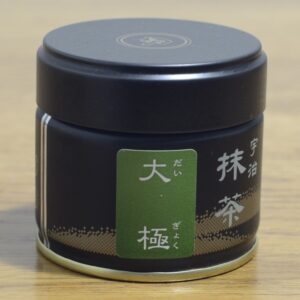
If you’ve compared Japanese matcha recently, you’ve probably noticed something quickly:
Good matcha can be expensive.
And matcha sold as “ceremonial grade” can be particularly expensive.
But the words ceremonial grade aren’t actually what make matcha expensive.
Ceremonial grade isn’t a standardised Japanese government grade. It’s a commercial term commonly used for matcha positioned for drinking, particularly with water.
The real cost comes from what is behind the matcha: how the tea was grown, the tencha used to make it, where it came from, how it was processed, the producer, supply, demand and sometimes simply the reputation of the brand.
And in recent years, another factor has become impossible to ignore:
Global demand for Japanese matcha has surged while supply has struggled to keep up.
1. Matcha Starts With Tencha
Matcha isn’t simply ordinary green tea ground into powder.
It is made from tencha.
Japan’s Ministry of Agriculture, Forestry and Fisheries explains that tea intended for tencha is grown using covered cultivation. After harvesting, the leaves are steamed and dried without the rolling process used for teas such as sencha. Stems and leaf veins are removed, and the resulting tencha can then be ground into matcha.
These additional cultivation and processing requirements contribute to the cost of producing matcha.
2. The Tea Plants Are Shaded
One of the important differences between tencha production and ordinary open-grown tea is shading.
Before harvest, tea plants intended for tencha are grown under covered conditions that reduce sunlight.
MAFF explains that this covered cultivation affects the chemistry and flavour of the tea, helping retain theanine associated with umami while reducing its conversion into more astringent catechins.
Creating and managing these covered tea gardens requires additional work compared with simply growing tea completely exposed to the sun.
And the method used can vary between producers and tea gardens.
3. High-End Tea Can Require More Labour
Not every matcha is handpicked.
That’s an important distinction.
Modern Japanese tea production can involve mechanised harvesting and processing.
However, traditional hand-picking is still practised for some high-end Uji teas.
The Kyoto Prefectural Tea Industry Association documents tea gardens around Uji where tea intended for high-quality tencha is still picked by hand.
Hand-picking is slower and more labour intensive than mechanical harvesting.
That can contribute to the price of particular teas.
So rather than assuming:
ceremonial grade = handpicked
look for information about the actual matcha you’re buying.
4. Processing Tencha Takes Work
Once harvested, the leaves still aren’t matcha.
They need to become tencha first.
Fresh tea leaves are steamed to stop enzymatic oxidation and then dried without rolling.
The Kyoto Prefectural Tea Industry Association documents the specialised equipment and stages involved in producing tencha.
The stems and veins are later removed before the refined tencha is ready to be milled into matcha.
Every additional stage requires equipment, labour, energy, expertise and time.
5. Milling Can Add to the Cost
Traditional matcha production is strongly associated with stone milling.
Stone milling is slow compared with high-volume industrial grinding.
For producers using traditional stone mills, that creates a natural bottleneck. You can’t simply push unlimited quantities through the mill because increasing speed can affect the powder and generate additional heat.
However, just like hand-picking, don’t assume every product labelled ceremonial grade has been processed in exactly the same way.
If stone milling matters to you, look for information from the producer about how that particular matcha was made.
6. Cultivar Can Affect Price
Matcha isn’t made from one single type of tea plant.
Japan grows numerous tea cultivars, and different cultivars can have different characteristics, yields and availability.
For tencha production around Uji, cultivars can include varieties such as:
Samidori
Gokou
Asahi
Uji Hikari
Okumidori
Yabukita
Some are much more widely grown than others.
A tea made from a cultivar with limited production can cost more simply because there is less of it available.
Cultivar isn’t a guarantee of quality by itself, but it is one of the things that can influence the price of a particular matcha.
7. Origin Can Affect Price
Where the tea comes from can also influence price.
Historic tea-producing regions such as Uji and the wider southern Kyoto tea-growing area have long-established producers, specialised tencha cultivation and strong reputations.
MAFF notes that Uji tea has a history stretching back centuries and that tea gardens and tea businesses operating for several hundred years remain active today.
But this doesn’t mean:
Uji = automatically better
or
other Japanese regions = lower quality.
Excellent matcha is produced in several parts of Japan.
Origin can affect supply, production costs and market demand, but it should be considered alongside the actual producer, cultivar, harvest and flavour.
8. You’re Sometimes Paying for the Producer
Two tins containing the same amount of Japanese matcha can have very different prices.
Part of that difference may come from the producer.
Established Japanese tea houses can have long histories, experienced tea makers, established relationships with growers and strong demand for particular products.
Some teas are also blended by experienced tea makers to achieve a particular flavour profile rather than sold as single-cultivar or single-farm matcha.
You’re therefore not always paying purely for the raw tea leaves.
You’re potentially paying for sourcing, selection, blending, consistency, processing and the reputation built by the producer.
But reputation alone doesn’t guarantee that you’ll personally prefer the tea.
9. Supply Is Limited
Tea isn’t something a producer can manufacture instantly when demand increases.
Tea plants have to be grown.
Tencha has to be produced.
Processing capacity has limits.
Certain cultivars, farms and harvests have limited quantities available.
And when a particular tea sells out, the producer can’t simply press a button and make another batch.
This has become particularly important as global matcha demand has increased.
10. Global Matcha Demand Has Surged
This is now one of the biggest factors affecting matcha prices.
Japanese matcha has experienced extraordinary global demand, driven by matcha lattes, cafés, social media, tourism and growing international interest in Japanese tea.
In 2025, ABC Australia reported what the Global Japanese Tea Association described as an “unprecedented” matcha shortage.
Popular Japanese producers introduced purchase limits and products repeatedly sold out.
The effects also reached the raw tea market.
At Kyoto’s first tea auction of 2025, ABC reported that tencha prices nearly doubled compared with the previous year, exceeding ¥8,000 per kilogram and reaching record levels.
Major Japanese matcha producers also announced significant price increases.
When the raw material becomes more expensive, those costs eventually move through producers, wholesalers, importers, retailers and finally to the person buying the matcha.
11. Matcha Production Can’t Expand Overnight
Increasing production isn’t as easy as responding to demand for a factory-made product.
New tea plants take time to establish.
Farmers need suitable land.
Tencha production requires specialised cultivation and processing.
Milling and processing capacity also need to expand.
ABC reported that Japanese producers have been increasing planting and upgrading equipment, but these changes can take years to translate into significantly more matcha.
That creates a basic economic problem:
Demand can increase very quickly. Tea production cannot.
And when demand grows faster than supply, prices rise.
12. Importing Matcha Adds More Costs
If you’re buying Japanese matcha in Australia, the cost doesn’t stop when the matcha leaves Japan.
There can also be:
international freight
currency conversion
customs and import costs
Australian food compliance
warehousing
cold storage
packaging
local fulfilment
payment processing
and Australian shipping.
Those costs are ultimately part of the retail price you see on the shelf.
This is one reason comparing the Japanese retail price of a tin directly with its Australian retail price doesn’t always tell the whole story.
13. Is More Expensive Matcha Always Better?
No.
Price can tell you something, but it can’t tell you everything.
An expensive matcha might come from a famous producer, rare cultivar, small production lot or highly sought-after harvest.
You still might prefer something cheaper.
Taste is personal.
A $90 matcha isn’t automatically three times more enjoyable than a $30 matcha.
And if you’re making a large latte with milk and syrup, you may find that a less expensive matcha with a stronger flavour actually works better for you.
This is why we don’t recommend choosing matcha based on price alone.
14. Does Ceremonial Grade Mean Expensive?
Not necessarily.
Because ceremonial grade isn’t standardised, there is no minimum price a matcha must reach before it can be called ceremonial.
You’ll find products labelled ceremonial grade at dramatically different prices.
That alone tells you something important:
The label isn’t what determines the value of the tea.
Look behind it.
Who made it?
Where was it grown?
What cultivar was used?
What harvest is it?
How was it grown and processed?
How does it taste?
Those questions tell you much more.
Is Expensive Matcha Worth It?
Sometimes.
If you drink matcha with water and enjoy exploring differences between cultivars, producers and tea-growing regions, paying more can open up some fascinating teas.
If you mostly drink matcha with milk, you may find your favourite latte matcha at a much lower price.
And sometimes the expensive matcha simply isn’t the one you prefer.
That’s okay.
The goal isn’t to drink the most expensive matcha you can afford.
It’s to find matcha you actually enjoy.
Frequently Asked Questions
Why is ceremonial grade matcha so expensive?
The ceremonial label itself doesn’t make matcha expensive. Higher prices can come from specialised tencha cultivation and processing, labour, milling, cultivar, origin, producer reputation, limited production and strong demand.
Is ceremonial grade an official Japanese grade?
No. Ceremonial grade is commercial terminology rather than a standardised Japanese government matcha grade.
Why has matcha become more expensive?
Global demand for Japanese matcha has increased dramatically while production has struggled to expand quickly enough. Tencha prices in Kyoto reached record levels during the recent matcha shortage.
Is expensive matcha better?
Not automatically. More expensive matcha may involve scarce cultivars, specialised production or highly regarded producers, but your personal taste still matters.
Is Uji matcha more expensive?
Some Uji matcha can command high prices because of production methods, limited supply, historic producers and strong demand. But Uji origin alone doesn’t guarantee quality.
Is first harvest matcha more expensive?
It can be, particularly when supply is limited or the tea is highly sought after, but first harvest alone doesn’t determine price or quality.
Should I buy expensive matcha for lattes?
You can, but you don’t necessarily need to. Some less expensive matcha has a stronger flavour that works particularly well with milk.
The Bottom Line
So why is ceremonial grade matcha so expensive?
The better question is:
Why is some Japanese matcha so expensive?
Because behind a small tin can be specialised tea cultivation, tencha processing, skilled producers, limited cultivars, milling, labour, scarce supply and increasingly intense global demand.
But don’t assume that the word ceremonial guarantees any of those things.
Look at the tea itself.
And don’t assume the highest price automatically means the best matcha for you.
At UJIHA, we’d rather tell you where the tea comes from, who produced it and what it tastes like.
Then you can decide whether it’s worth the price.
Official and Authoritative Sources
Japan Ministry of Agriculture, Forestry and Fisheries: Uji Tea
Official information on Uji tea, covered cultivation, tencha processing, matcha production and the history of tea production in Kyoto.
https://www.maff.go.jp/e/policies/market/dento_syoku/menu/uzi_tea.html
Kyoto Prefectural Tea Industry Association: How Tencha Is Made
Detailed information on the steaming and drying processes used in tencha production.
https://www.ujicha.or.jp/en/knowledge/flow/seichahoho
Kyoto Prefectural Tea Industry Association: Uji Tea Fields
Information about covered cultivation, hand-picking and high-quality tencha production in Uji tea-growing areas.
https://www.ujicha.or.jp/en/knowledge/flow/chabatake
ABC Australia: Global Matcha Shortage and Record Prices
Reporting on rising international matcha demand, shortages, producer purchase limits, record tencha auction prices and price increases from Japanese matcha producers.