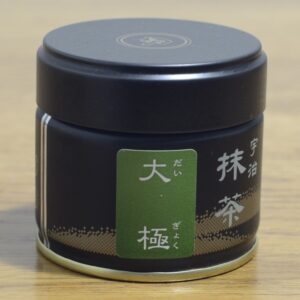
Yes. You can absolutely use ceremonial grade matcha for lattes.
There is no rule saying matcha labelled “ceremonial grade” must only be whisked with water.
Some matcha tastes beautiful with milk. Some is so delicate that much of its character becomes harder to notice in a latte. And some stronger matcha may actually work better with milk than a more expensive tea.
The important thing is not the word ceremonial on the packet.
It’s how the matcha actually tastes with milk.
At UJIHA, that’s how we prefer to look at it.
Good matcha. Your milk. Your way.
Is Ceremonial Grade Matcha Good for Lattes?
It can be.
A good matcha latte needs enough tea character to remain noticeable once milk is added.
That could mean umami, nuttiness, sweetness, vegetal character, bitterness, astringency or a combination of these depending on the matcha.
A delicate matcha can taste wonderful with water but almost disappear when you add a large amount of milk.
Another matcha might have a stronger flavour that becomes beautifully balanced once milk is added.
Neither result can be predicted simply from the words “ceremonial grade.”
That’s why we think the better question is:
Does this particular matcha taste good as a latte?
What Does Ceremonial Grade Actually Mean?
“Ceremonial grade” sounds like an official Japanese tea classification, but it isn’t a standardised grade.
The term is commonly used commercially for matcha positioned for drinking, particularly matcha intended to be whisked with water.
ABC Australia has reported that ceremonial, premium and culinary matcha grades aren’t governed by a standardised grading system. Instead, companies can use these terms differently.
That means a matcha labelled ceremonial grade isn’t automatically:
- first harvest
- sweeter
- less bitter
- organic
- from Uji
- made from a particular cultivar
- better than every matcha without the label
- unsuitable for milk
This is why we prefer looking beyond the grade.
If you’d like the full explanation, read our guide to What Does Ceremonial Grade Matcha Mean?
Isn’t Ceremonial Grade Matcha Supposed to Be Used With Water?
Matcha has a deep connection with Japanese tea culture.
Japan’s Ministry of Agriculture, Forestry and Fisheries explains that matcha is made by grinding tencha into powder and that its development has been closely connected with Japanese tea ceremony culture.
Traditionally, matcha can be prepared with water as usucha or, with suitable matcha, as the much thicker koicha.
Preparing matcha with water gives you a particularly direct experience of the tea because there is no milk or sweetener competing with its flavour.
But traditional use doesn’t mean you’re forbidden from doing anything else with it.
Matcha is now widely enjoyed in lattes, desserts and other foods around the world.
Even in Australia, matcha lattes have become a major part of how people experience matcha.
So if you enjoy your favourite Japanese matcha with oat milk and ice, you’re allowed to enjoy it that way.
Does Milk Ruin Ceremonial Grade Matcha?
No.
Milk changes how you experience the matcha, but that isn’t the same as ruining it.
When you whisk matcha with water, you’re tasting the tea relatively directly.
Add milk and the balance changes.
Creaminess can soften bitterness and astringency. At the same time, subtle aromas and flavours can become less obvious.
This can be a good thing or a bad thing depending on the tea and what you enjoy.
If you love the result, the milk hasn’t ruined your matcha.
You’ve made a drink you like.
Can Ceremonial Matcha Be Too Delicate for Milk?
Yes, and this is one reason price shouldn’t be your only guide when choosing matcha for lattes.
Imagine you have a particularly delicate matcha with subtle aroma and gentle flavour.
It might be beautiful as usucha.
Add 200 ml of milk and much of that character may become difficult to notice.
Now take another matcha with a stronger tea flavour and more noticeable bitterness.
You might prefer the first one with water but the second one with milk.
This is why the most expensive matcha isn’t automatically the best latte matcha.
Does Ceremonial Grade Make a Better Matcha Latte?
Not automatically.
This is one of the biggest misconceptions around matcha grades.
A higher price or a ceremonial label doesn’t guarantee that the tea will perform better with milk.
For a latte, we’re interested in things such as:
Can you still taste the matcha?
Does the flavour work with milk?
Does the bitterness become pleasantly balanced or disappear too much?
Do you enjoy the resulting drink?
Those questions are much more useful than simply asking what “grade” is written on the packet.
What Matcha Is Best for Lattes?
There’s no single answer because people want different things from their matcha latte.
Some people want a creamy, mild latte.
Others want strong matcha flavour that punches through the milk.
Some like bitterness.
Others want as little bitterness as possible.
Some drink cow’s milk. Others use oat, almond, soy or another plant-based milk.
The matcha that works beautifully with one combination may not be your favourite with another.
At UJIHA, we select matcha for lattes based on how the tea actually performs with milk rather than assuming a particular grade is automatically better.
Ceremonial Grade vs Latte Grade Matcha
“Latte grade” isn’t an official Japanese matcha grade either.
It’s generally a useful commercial description telling you that a seller considers the matcha suitable for milk.
And that can actually be helpful.
A matcha selected for lattes may have enough flavour and structure to remain noticeable when combined with milk while also being priced sensibly enough for everyday latte drinking.
ABC reported during Australia’s matcha shortage that so-called “latte grade” matcha had become particularly popular as consumers increasingly drank matcha with milk.
But just like ceremonial grade, the words latte grade don’t tell you everything about what’s inside the packet.
For a deeper comparison, read our guide to Latte Grade vs Ceremonial Grade Matcha.
Is It a Waste to Put Expensive Matcha in a Latte?
Only if you don’t enjoy the result.
From a value perspective, there can be a point where paying substantially more for subtle characteristics doesn’t make sense if those characteristics disappear behind milk.
That’s something worth considering.
If you have a rare or expensive matcha and love drinking it with water, you may prefer to save it for usucha.
But maybe that same matcha makes the best iced latte you’ve ever had.
In that case, use it.
You’re buying matcha to enjoy it.
How Much Matcha Should You Use for a Latte?
A useful starting point is around 2 grams of matcha.
From there, adjust according to the matcha, the amount of milk you’re using and how strong you like your latte.
For example, a simple starting method is:
- Sift around 2 g of matcha into a bowl or cup.
- Add a small amount of warm water.
- Whisk until smooth.
- Add your preferred amount of milk.
- Taste it.
- Adjust the matcha-to-milk ratio next time if needed.
For iced matcha, pour the prepared matcha over milk and ice.
There isn’t one perfect ratio for everyone.
If the matcha disappears behind the milk, use less milk or slightly more matcha.
If it’s too strong, do the opposite.
What Temperature Water Should You Use?
You don’t need boiling water.
For many matchas, around 70 to 80°C is a useful starting range.
The exact temperature can be adjusted depending on the matcha and your taste.
You also don’t need much water when making a latte because the goal is to create a concentrated matcha base before adding milk.
Do You Need a Chasen for a Matcha Latte?
No.
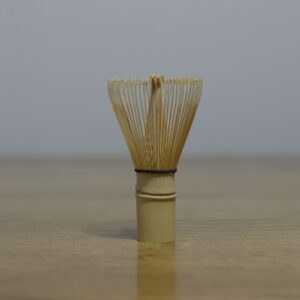
A bamboo whisk, or chasen, is excellent for preparing matcha, but it’s not the only way to make a latte.
You can also use a handheld frother, shaker bottle or another method that disperses the powder effectively.
The important part is getting the matcha evenly suspended without large clumps.
If you enjoy using a chasen, use one.
If your morning routine works better with a frother, use that.
What Milk Is Best With Ceremonial Grade Matcha?
There isn’t one correct milk.
Cow’s milk, oat milk, soy milk, almond milk and other alternatives can all work.
But they don’t taste the same.
The milk changes sweetness, creaminess and how strongly you perceive the matcha.
That’s another reason we don’t think a matcha can simply be declared “the best latte matcha” without considering how it’s being prepared.
Try different combinations.
You might be surprised by which one you prefer.
Should You Sweeten a Ceremonial Matcha Latte?
Only if you want to.
Some matcha and milk combinations may taste balanced without additional sweetness.
Others may taste better to you with sugar, honey, syrup or another sweetener.
Sweetening your latte isn’t doing matcha incorrectly.
It’s simply changing the drink.
Start without sweetener, taste it, then decide.
Can You Make an Iced Latte With Ceremonial Grade Matcha?
Absolutely.
Prepare a concentrated matcha base with a small amount of water, then combine it with cold milk and ice.
In fact, an iced matcha latte can be a useful way of exploring different matchas because you can easily adjust the amount of milk until you find the balance you like.
If the matcha disappears, reduce the milk.
If it’s too strong, add more.
Is First Harvest Matcha Better for Lattes?
Not automatically.
First harvest, or ichibancha, tells you when the tea was harvested.
It doesn’t tell you whether you’ll prefer that particular matcha with milk.
First harvest matcha can make an excellent latte.
So can other matcha.
Rather than treating first harvest as a guarantee of quality or latte performance, look at the actual tea and how it tastes.
Read our What Is First Harvest Matcha? guide if you’d like to understand the term in more detail.
Is Organic Matcha Better for Lattes?
Again, not automatically.
Organic describes how the tea was produced and, where applicable, certified.
It doesn’t tell you whether you’ll prefer its flavour with milk.
We’ve tasted organic matcha that works beautifully as usucha, organic matcha that works beautifully with milk, and matcha where we’d personally choose another tea for the job.
Organic and conventional Japanese matcha can both be excellent.
Choose organic if organic production matters to you.
Choose your latte matcha based on how you actually like drinking it.
Frequently Asked Questions
Can you use ceremonial grade matcha for lattes?
Yes. There is no rule preventing matcha labelled ceremonial grade from being used with milk.
Is ceremonial grade matcha wasted in a latte?
Not necessarily. Some delicate matcha may lose subtle characteristics behind milk, but if you enjoy the resulting latte, it isn’t wasted.
Is ceremonial grade better than latte grade?
Not automatically. Neither ceremonial grade nor latte grade is a standardised Japanese matcha grade. The better choice depends on the individual tea, milk and your taste.
Does ceremonial grade matcha taste good with oat milk?
It can. Oat milk changes the flavour and sweetness of the drink, so the result depends on the individual matcha and the oat milk you’re using.
Can I make iced matcha lattes with ceremonial grade matcha?
Yes.
Should ceremonial matcha only be drunk with water?
No. Preparing matcha with water lets you experience the tea more directly and has deep roots in Japanese tea culture, but you’re free to use your matcha with milk.
How much matcha should I use for a latte?
Around 2 g is a useful starting point. Adjust the amount of matcha and milk according to your taste.
Is expensive matcha better for lattes?
Not necessarily. A less expensive matcha with a stronger flavour may perform better with milk than a very delicate, expensive matcha.
So, Should You Use Ceremonial Grade Matcha for Lattes?
Yes, if you like it that way.
Don’t let the word ceremonial convince you that good matcha is somehow too precious for milk.
At the same time, don’t assume paying more automatically gives you a better latte.
Try the matcha with water.
Try it with milk.
Change the ratio.
Try it hot.
Try it iced.
Then decide which preparation brings out what you enjoy about that tea.
That’s ultimately what matters.
We tell you about the tea. You decide how to drink it.
Official and Authoritative Sources
Japan Ministry of Agriculture, Forestry and Fisheries: Uji Tea
MAFF explains matcha’s production from tencha and its historical relationship with Japanese tea culture.
https://www.maff.go.jp/e/policies/market/dento_syoku/menu/uzi_tea.html
ABC Australia: Understanding Matcha Grades
ABC discusses ceremonial, premium and culinary terminology and the lack of a standardised regulation governing those matcha grades.
https://www.abc.net.au/asia/understanding-the-difference-between-matcha-qualities/105012604
ABC Australia: Australia’s Matcha Shortage
ABC reports on the rapid growth of matcha lattes in Australia and discusses the commercial use of “latte grade” matcha.