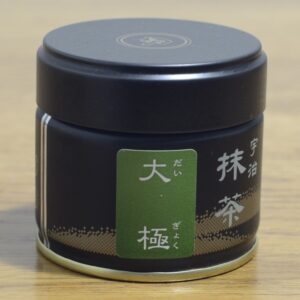
We have a problem at Ujiha.
Someone sent us a box full of matcha.
Okay, maybe that’s not really a problem.
We’ve been working our way through matcha samples from Maiko Tea, testing them one by one to see what they actually taste like.
And we’re not just opening the packet, staring at how green it is and going:
“Wow. Premium.”
Nope.
We’re drinking them.
First as usucha, so we can actually taste the matcha without milk or sweeteners getting involved. Then, for some of them, we’re making a matcha latte to see what happens when milk enters the picture.
Because we’ve learned something pretty quickly from doing these tests.
A matcha that tastes good with water doesn’t necessarily make a good latte.
And sometimes the opposite happens.
Looking at you, M3.
This page is our ongoing Maiko Tea matcha review. We’ll keep updating it as we work our way through the samples.
How We’re Testing the Maiko Tea Samples
We wanted to keep things fairly consistent.
For usucha, we generally use:
2g matcha + 60mL water
For our stronger latte tests:
4g matcha + 30mL water + 100mL almond milk
We’ve generally been using water around 70°C.
We sift the matcha first, because drinking little green clumps isn’t exactly my idea of a good tasting session.
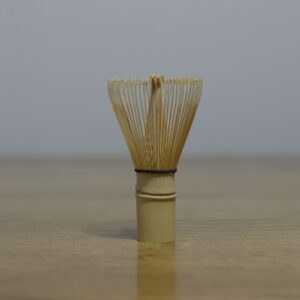
Then we whisk it with a bamboo chasen and taste.
For each matcha, I’m mainly looking at four things:
Bitterness, astringency, umami and creaminess.
I’ll also note anything else that jumps out at me, like aroma, nuttiness, chocolate, citrus or anything unusual.
These aren’t official scores from Maiko Tea.
They’re just what I actually tasted.
And taste is personal.
Something I find too bitter might be exactly what you like.
That’s half the fun.
Maiko Tea M3 Review
M3 caught me off guard.
Not because it was amazing as usucha.
It wasn’t.
The surprise came later.
M3 as Usucha
I started with 2g of M3.
Sift, sift, sift.
I added 30mL of water at 70°C and gave it a smell.
And finally, we had an aroma that made me stop.
Chocolate.
It smelled surprisingly chocolatey.
I started whisking and then realised something.
Oh crap.
I thought I was making a latte.
So I added another 30mL of water, bringing the total to 60mL, and whisked it again.
Luckily, M3 foamed beautifully.
Seriously, the foam looked great.
Then came the important bit.
Drinking it.
M3 Usucha Taste
Bitterness: 2/5
Pretty low. There was bitterness there, but nothing aggressive.
Astringency: 3/5
More noticeable. There was some dryness after drinking it.
Umami: 3/5
Right around the middle.
Creaminess: 3/5
Again, middle of the road.
But there was something else.
Citrus.
I got this citrusy finish after drinking it, which made the matcha much more interesting.
So M3 wasn’t bad.
Chocolate aroma. Nice foam. Mild bitterness. Citrus finish.
But I wasn’t sitting there thinking:
“This is incredible.”
Then I made a latte.
And things changed.
M3 Matcha Latte Test
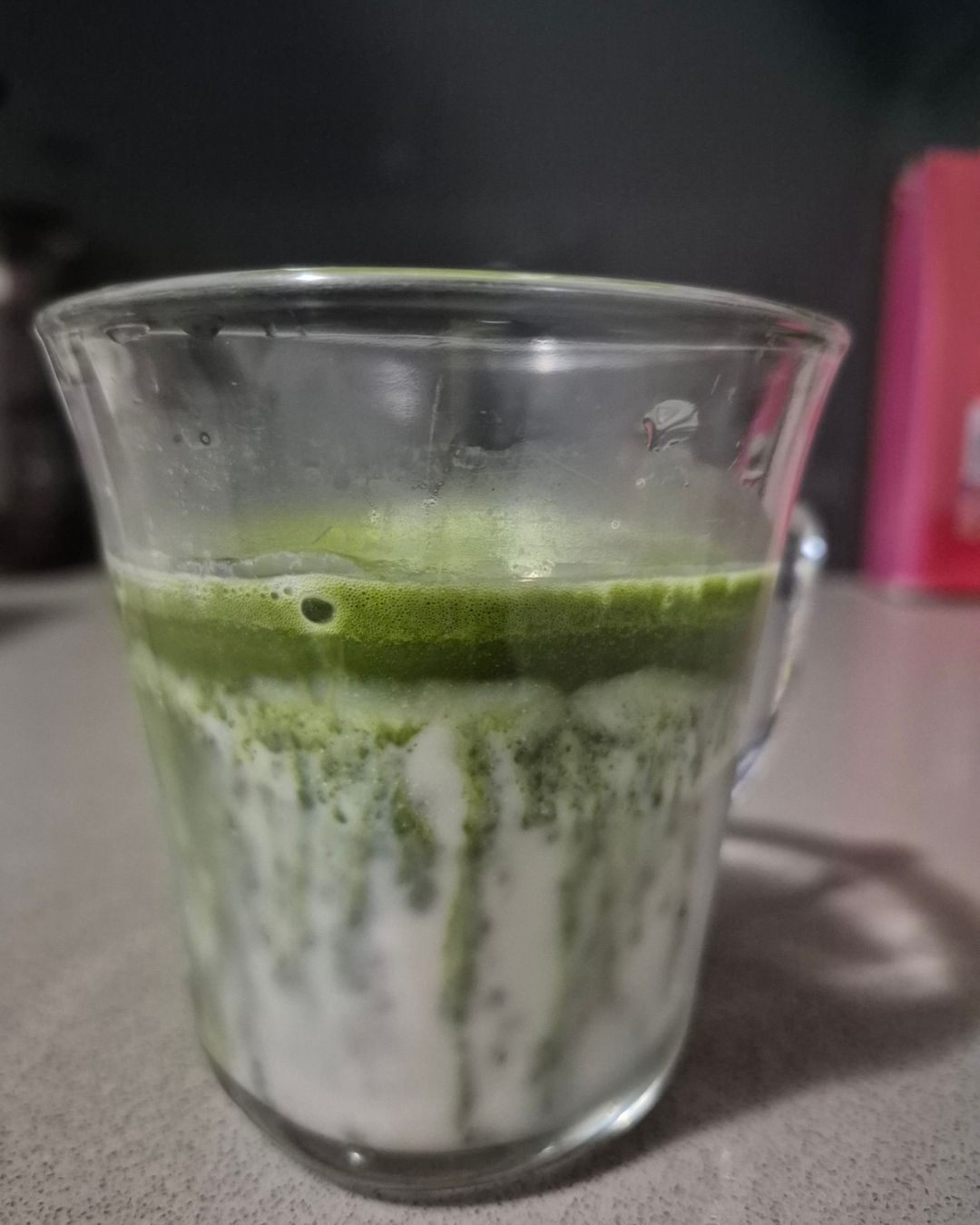
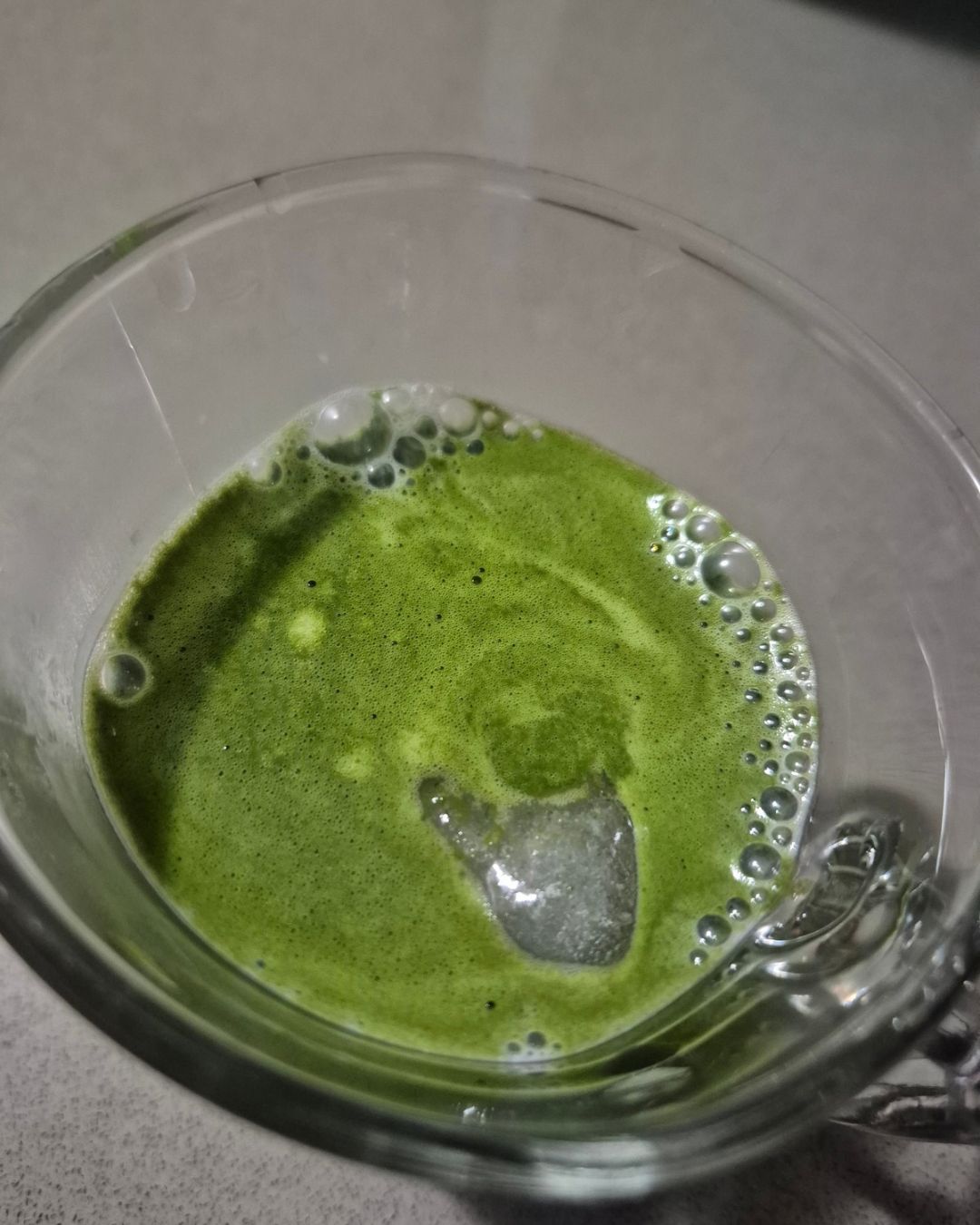
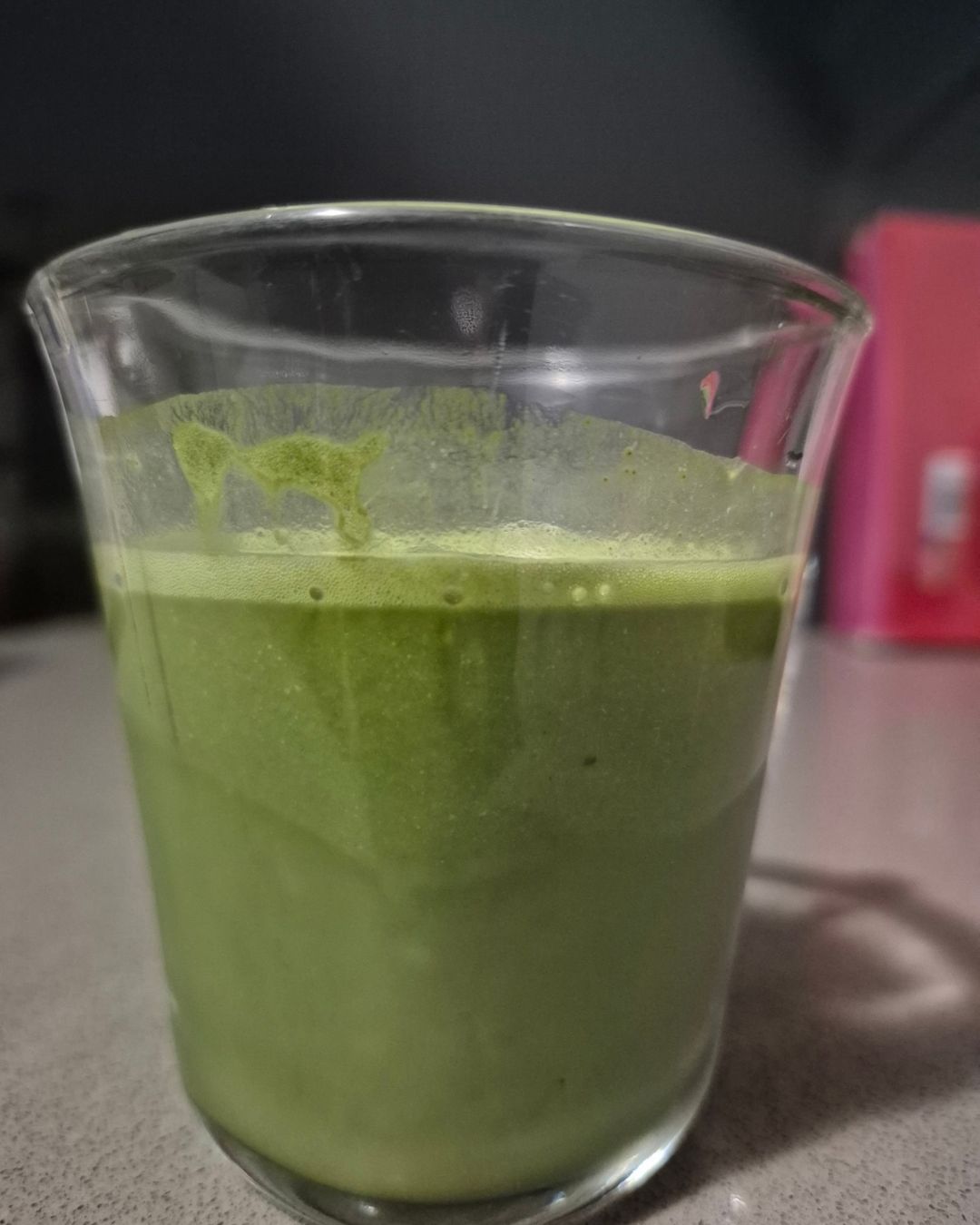
This time I used 4g of M3.
Well…
I accidentally put too much in first.
So some had to come back out.
We’re doing a taste test here. No random 4.7g matcha experiments today.
Once I had the amount right, I sifted it.
Again, always sift your matcha if you hate clumps.
I added 30mL of water and let the water meet the matcha.
Then another sniff.
That chocolate aroma was still there.
More specifically, it reminded me of dark chocolate.
I whisked it until it was smooth and green, then prepared 100mL of almond milk.
Matcha goes in.
And…
Hang on.
This is actually good.
M3 Was Better as a Latte
This was the surprise.
I wasn’t particularly excited about M3 as usucha, but I enjoyed it considerably more with almond milk.
First thing I noticed was the colour.
It stayed green.
That’s always nice because some matcha lattes end up looking like somebody washed a green paintbrush in a glass of milk.
More importantly, I could still taste the matcha.
That’s a big one.
Milk can absolutely steamroll a matcha. We’ve already seen it happen with some of the other Maiko samples.
M3 didn’t disappear.
M3 Latte Taste
Bitterness: 2/5
Still quite mild.
Astringency: 3/5
There was still some dryness.
Umami: 3/5
The matcha flavour remained noticeable through the almond milk.
Creaminess: 3/5
Nice enough. Not insanely creamy, but enjoyable.
Then I waited for that citrus finish I tasted in the usucha.
…
Nothing.
The citrus was gone.
Apparently the almond milk had other plans.
So we lost one of the more interesting parts of M3, but the overall drink actually worked better for me.
Is Maiko Tea M3 Better for Lattes?
For me?
Yes.
At least based on these two preparations.
The usucha had more interesting individual characteristics. I got the chocolatey aroma, nice foam and that citrus finish.
But as an actual drink, I preferred the latte.
The almond milk softened things without completely burying the matcha.
That is exactly what I’m looking for when testing matcha for lattes.
Milk can smooth matcha’s bitterness and change the overall flavour quite dramatically, which is something we’ve talked about in our full guide to matcha and milk. Different matchas behave very differently once milk gets involved.
M3 is a pretty good example of that.
Maiko Tea M4 Review
M4 was another interesting one.
But for a completely different reason.
M4 as Usucha
I prepared M4 with 2g matcha and 60mL water at 70°C.
First, I smelled it.
Nothing.
So I smelled it again.
Still nothing.
One more sniff because apparently I thought the aroma might arrive late.
Nope.
There wasn’t really a pronounced aroma that I could pick up.
Then I tasted it.
M4 Usucha Taste
Bitterness: 3/5
Right in the middle.
Bitter, but not enough to make me pull a face.
Astringency: 4/5
This was much more noticeable.
M4 left quite a dry feeling in my mouth, and I didn’t particularly enjoy that part.
Umami: 2/5
Fairly low.
Creaminess: 2/5
Also fairly low.
So far, not exactly setting off fireworks.
But then came the finish.
Citrus.
I really liked it.
There was also a subtle roasted, nutty character that made the finish more interesting.
That citrus aftertaste was easily my favourite part of drinking M4 as usucha.
Then, naturally, I threw almond milk at it.
M4 Matcha Latte Test
For the latte I used:
4g M4 matcha + 30mL water at 70°C + 100mL almond milk
I whisked the matcha and poured it into the milk.
Colour?
Still green enough.
No pea soup situation here.
Then I tasted it.
The almond milk definitely changed M4.
Bitterness dropped to 2/5.
Astringency dropped to 3/5.
Umami stayed at 2/5.
Creaminess increased to 3/5.
So technically, the latte fixed some of the things I didn’t like about the usucha.
Less bitter.
Less dry.
Creamier.
Great.
Except…
Remember that citrus finish I really liked?
Gone.
Again.
Apparently citrus and almond milk aren’t getting along in these tests.
The milk made M4 easier to drink, but it also removed the characteristic I found most interesting.
Maiko Tea MO1 Organic Matcha Review
Now we get to the organic samples.
And MO1 did not mess around.
Unfortunately, neither did its bitterness.
As usucha, MO1 was very bitter to me.
Not slightly bitter.
Not pleasantly bitter.
It was bitter enough that it dominated the experience and I didn’t particularly want to keep drinking it straight.
I couldn’t pick out much else because the bitterness was doing all the talking.
Then I added almond milk.
Surely milk would calm it down, right?
Well…
It did something else.
The matcha basically disappeared.
Using 2g matcha, 60mL water and 100mL almond milk, I struggled to taste the matcha through the milk.
So MO1 wasn’t working for me as usucha, and at that particular latte ratio, it wasn’t working for me with almond milk either.
Maiko Tea MO2 Organic Matcha Review
MO2 was easier.
It wasn’t as bitter as MO1.
That’s good.
But there was another problem.
Nothing really jumped out at me.
It wasn’t terrible.
It just didn’t give me anything that made me stop and think, “Oh, that’s interesting.”
Then came the same almond milk test.
And once again…
Where’d my matcha go?
The flavour struggled to come through the 100mL of almond milk.
So after MO1 and MO2, I was starting to wonder how the third organic sample would perform.
Enter MO1A. But wait…
Here’s the video of the MO1 and MO2 Maiko Tea matcha review.
Maiko Tea MO1A Organic Matcha Review
This one was different.
Of the first three Maiko organic samples I tested, MO1A was easily my favourite.
As usucha, there wasn’t much bitterness.
There was some creaminess.
I could actually sit there and drink it straight without feeling like my tongue was being punished.
There was still noticeable astringency, though.
That dry sensation stuck around.
It also wasn’t particularly smooth, and the foam wasn’t amazing.
But flavour matters more to me than whether the top of my matcha looks ready for Instagram.
So far, MO1A was winning the organic battle.
Here’s the view of MO1A being made as an usucha.
MO1A Latte Test
First test:
2g MO1A + 60mL water + 100mL almond milk
Better than MO1 and MO2.
I could still taste some matcha.
But it was subtle.
The almond milk was still doing most of the talking.
So I changed the ratio.
4g MO1A + 30mL water at 70°C + 100mL almond milk
Now we’re talking.
The matcha flavour came through much more strongly.
It also felt smoother and creamier.
No grittiness.
But the dryness was still there after drinking it.
So MO1A could handle almond milk.
It just needed more matcha to do it.
Maiko Tea Matcha Results So Far
Here’s where I’m currently at.
| Matcha | What I Thought as Usucha | What Happened With Almond Milk |
|---|---|---|
| M3 | Chocolatey aroma, mild bitterness, citrus finish | Surprisingly good, matcha stayed noticeable, citrus disappeared |
| M4 | Dry, medium bitterness, citrus and subtle roasted/nutty finish | Less bitter and dry, creamier, but citrus disappeared |
| MO1A | My favourite of the first three organics, low bitterness but noticeable astringency | Better at 4g, matcha came through strongly |
| MO1 | Very bitter for my taste | Matcha became difficult to taste |
| MO2 | Less bitter than MO1, but nothing really stood out | Matcha became difficult to taste |
And we’re nowhere near finished.
So, Which Maiko Tea Matcha Is Best?
I’m not calling it yet.
We’ve still got more samples to drink.
And honestly, that’s one of the reasons I’m enjoying doing this.
Before these tests, it would have been very easy to taste a matcha as usucha and decide whether I liked it.
But M3 threw a little spanner in the works.
I wasn’t that excited by it straight.
Then I added almond milk and thought:
Wait… where have you been hiding?
That’s why we’re going to keep testing these samples both ways where it makes sense.
Some people drink matcha traditionally with water.
Others make an iced matcha latte every morning and couldn’t care less whether their matcha produces the perfect bowl of usucha.
Neither is wrong.
What matters is finding the matcha that tastes right for the way you actually drink it.
If you’re mainly a latte drinker, you can also explore our Matcha for Lattes collection. We’ve selected Japanese matcha with enough flavour and character to come through milk, which is exactly what we’re testing for here.
We’ll keep updating this page as we taste more of the Maiko Tea samples.
Some will probably be great.
Some might disappear into milk.
And I’m sure at least one more is going to make my face do something unfortunate.
That’s part of the fun.
Ujiha Matcha