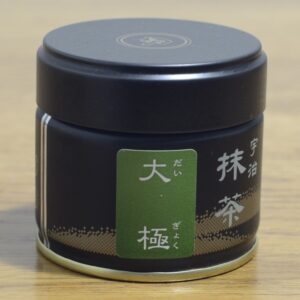
Organic ceremonial matcha combines two terms you’ll often see when shopping for Japanese matcha.
But they don’t mean the same thing.
Organic refers to how the tea is produced and, when certified, the organic standard it meets.
Ceremonial grade is a commercial term commonly used for matcha positioned for drinking, particularly matcha intended to be whisked with water.
So when you see “organic ceremonial matcha,” it generally means a matcha that is certified or marketed as organic and that the seller considers suitable for drinking rather than primarily for cooking.
The important part is understanding what each claim actually tells you about the tea.
What Is Organic Ceremonial Matcha?
There is no separate official Japanese certification called “organic ceremonial matcha.”
Instead, you’re looking at two different descriptions combined.
A Japanese matcha may be:
Certified Organic JAS
and also:
Marketed as ceremonial grade or recommended for drinking with water.
The organic part can have a defined certification behind it.
The ceremonial part doesn’t have the same standardised regulatory meaning.
That’s why we recommend looking beyond the words on the front of the packet.
If you’d like to understand this distinction in more detail, read our guide to Is Organic Matcha the Same as Ceremonial Matcha?
What Does Organic Actually Mean in Japan?
For Japanese agricultural products, Organic JAS provides an official framework for organic certification.
Japan’s Ministry of Agriculture, Forestry and Fisheries, or MAFF, explains that production must comply with the relevant Organic JAS standards and be inspected by a registered certification body before a certified operator can use the Organic JAS mark.
MAFF also explains that organic agricultural production is based on principles including avoiding chemically synthesised fertilisers and pesticides, preventing prohibited materials from entering organic fields, and following the requirements of the Organic JAS standard.
So when you’re specifically looking for Japanese organic matcha, Organic JAS is much more meaningful than vague words such as “natural” or “pure.”
MAFF: Organic JAS Certification System
Does Organic Matcha Contain Pesticides?
Organic doesn’t simply mean that no pest-control substances can ever be used.
Organic JAS restricts production methods and agricultural inputs, and MAFF provides specific information about materials that can be used within the Organic JAS system.
That’s why we don’t describe organic matcha as automatically “pesticide-free.”
It’s more accurate to say that certified organic matcha must be produced according to the applicable organic standard.
If you’d like to explore this subject in more detail, read Does Matcha Have Pesticides?
What Does Ceremonial Grade Mean?
This is where things become quite different.
Ceremonial grade isn’t an Organic JAS-style certification.
It’s a commercial term commonly used by matcha sellers for matcha they position for drinking, particularly with water.
There isn’t one universal ceremonial-grade specification that guarantees:
- First harvest
- A particular cultivar
- A particular origin
- Organic production
- Zero bitterness
- A particular shade of green
That’s why we’d rather tell you about the actual tea instead of relying entirely on the ceremonial label.
Read What Does Ceremonial Grade Matcha Mean? for our complete explanation.
How Is Matcha Actually Made?
This is something we can define more clearly.
Japan’s Ministry of Agriculture, Forestry and Fisheries describes matcha in its information about Uji tea.
For traditional Uji matcha production, tea grown for tencha uses covered cultivation. The harvested leaves are steamed and dried without rolling. After stems and leaf veins are removed, the resulting tencha is ground into fine powder to make matcha.
MAFF: Uji Tea and Matcha Production
This tells you much more about what matcha actually is than a marketing grade alone.
Does Organic Ceremonial Matcha Taste Better?
Not automatically.
Organic certification doesn’t guarantee a particular flavour.
And the words ceremonial grade don’t guarantee that you’ll personally enjoy a matcha.
A matcha’s flavour can be influenced by its:
- Cultivar
- Origin
- Growing conditions
- Harvest
- Shading
- Processing
- Blending
- Storage
- Preparation
One organic matcha might be creamy and umami-rich.
Another might have noticeable bitterness and astringency.
That’s not necessarily a sign that something has gone wrong.
Matcha is agricultural, and different teas taste different.
Read What Does Matcha Taste Like? for a deeper guide to matcha flavour.
Does Organic Matcha Have to Be First Harvest?
No.
Organic and first harvest describe different things.
Organic describes the production and certification system.
First harvest, often called ichibancha, describes harvest timing.
A matcha can therefore be:
Organic + first harvest
Organic + later harvest
Conventional + first harvest
or another combination.
First harvest can be useful information about a tea, but it isn’t required simply because the matcha is organic.
Read What Is First Harvest Matcha? for more.
Is First Harvest Required for Ceremonial Grade Matcha?
No universal ceremonial-grade standard requires it.
Many high-end drinking matchas are made using first-harvest material, but you shouldn’t assume that something is first harvest simply because the packet says ceremonial grade.
If harvest matters to you, look for the actual harvest information.
That’s more useful than trying to infer it from a marketing term.
Does First Harvest Matcha Always Taste Better?
Not necessarily.
First harvest teas can be highly prized, but harvest timing alone doesn’t determine the final quality of a matcha.
Producer, cultivar, cultivation, processing and storage all matter.
And ultimately, so does personal preference.
Some people prefer delicate matcha.
Others prefer stronger tea with more bitterness or astringency.
There’s no reason your favourite matcha has to be somebody else’s favourite.
Is Organic Ceremonial Matcha Always from Uji?
No.
Uji, organic, and ceremonial all describe different things.
Uji relates to geographic provenance.
Organic relates to a production and certification system.
Ceremonial grade is commercial terminology.
Uji has an enormously important place in Japanese tea history. MAFF documents the long development of Uji tea as well as its role in covered tea cultivation and the production of tencha and matcha.
But Uji isn’t the only place where Japanese matcha is produced.
So we wouldn’t automatically consider a matcha better simply because the word Uji appears on the packet.
Read What Is Uji Matcha? to understand the region in more detail.
What Is Tencha?
Before matcha becomes the green powder in your bowl, it begins as tencha.
MAFF describes tencha as tea produced from covered tea plants whose leaves are steamed and dried without rolling. After stems and leaf veins are removed, the tea can be ground into fine powder to make matcha.
This is one of the most useful distinctions to understand when learning about matcha.
Matcha isn’t simply any green tea leaf ground into powder.
What Is Usucha?
Usucha means thin tea and is one of the traditional ways matcha is prepared with water.
Because there’s no milk, syrup or other strong ingredient competing with the tea, usucha lets you experience the matcha itself more directly.
You may notice characteristics such as:
Umami
Sweetness
Bitterness
Astringency
Aroma
Texture
A useful starting point at home is around 2 grams of matcha with 60 to 80 ml of water at approximately 70 to 80°C.
From there, adjust the amount of water and temperature to suit the particular tea and your preferences.
Read What Is Usucha? for our full guide.
Does Organic Ceremonial Matcha Have to Be Used for Usucha?
No.
You bought it. Drink it how you enjoy it.
If an organic matcha tastes great with water, drink it as usucha.
If you love it over ice and milk, make an iced latte.
If it works both ways, even better.
Some delicate matchas may have flavours that are easier to notice when prepared with water, while stronger matchas may stand up particularly well to milk.
But there’s no rule saying good matcha can’t be used in a latte.
Latte, usucha, hot, iced or somewhere in between, enjoy matcha your way.
Can Organic Ceremonial Matcha Be Used for Koicha?
Potentially, but don’t assume that the word ceremonial means a matcha is suitable for koicha.
Koicha is considerably more concentrated than usucha, so bitterness, astringency and other characteristics become much more noticeable.
If you’re buying matcha specifically for koicha, look for a recommendation from the producer or retailer that the particular tea is suitable for it.
How to Choose Organic Ceremonial Matcha
Instead of looking for the longest list of impressive words on the packet, look for useful information.
1. Organic Certification
If organic production matters to you, look for recognised certification.
For Japanese organic tea, Organic JAS is particularly relevant.
MAFF explains that only certified operators can apply the Organic JAS mark to qualifying products.
2. Producer
Who made the matcha?
Knowing the actual tea producer can tell you much more than a generic ceremonial-grade label.
3. Origin
Where was the tea grown?
Look for meaningful provenance rather than assuming one region automatically means better matcha.
4. Cultivar
If available, cultivar information can help you explore the different characteristics of Japanese tea.
5. Harvest
If the seller says the tea is first harvest, that’s useful information.
Just keep it separate from the organic and ceremonial descriptions.
6. Recommended Preparation
Is the matcha recommended for:
Usucha?
Koicha?
Lattes?
Multiple preparations?
That’s much more useful than assuming how you’re supposed to drink it based on the word ceremonial.
7. Flavour
Most importantly, does it sound like something you’ll enjoy?
Look for actual flavour descriptions rather than simply:
Premium. Supreme. Ceremonial.
Does Colour Tell You If Matcha Is Good?
Colour can be useful, but it isn’t a certification.
A vibrant green powder doesn’t prove that a matcha is:
Organic
First harvest
Ceremonial grade
From Uji
or even that you’ll enjoy drinking it.
Matcha colour can be influenced by cultivar, cultivation, processing, age and storage.
Photography and lighting can also change how matcha appears online.
Treat colour as one piece of information, not the final verdict.
How to Prepare Organic Matcha
You don’t need an elaborate ceremony to enjoy good matcha.
For a simple usucha at home:
- Add around 2 grams of matcha to your bowl.
- Add approximately 60 to 80 ml of water at around 70 to 80°C.
- Whisk until evenly dispersed and a foam forms if that’s the texture you prefer.
- Taste it.
- Adjust the ratio or temperature next time if needed.
Different matchas respond differently to preparation, so don’t be afraid to experiment.
For a more complete walkthrough, read How To Make Matcha.
How to Store Organic Matcha
Organic matcha doesn’t need a completely different storage system from other matcha.
What matters is protecting the tea from things that can reduce its quality after opening, particularly:
Heat
Light
Air
Moisture
Strong odours
Keep the package tightly sealed and follow the producer’s storage instructions.
For more detail, read How To Store Matcha.
New to Matcha?
You don’t need to learn every Japanese tea term before making your first bowl.
Start with the basics.
Learn how much matcha to use, how water temperature changes the cup, how to whisk it, and how to store it.
Then start exploring producers, cultivars, harvests and different preparation styles as your tastes develop.
Our Guide to Matcha for Beginners walks you through the process.
Frequently Asked Questions
What is organic ceremonial matcha?
Organic ceremonial matcha generally describes matcha that is certified or marketed as organic and is also positioned by the seller as suitable for drinking. There is no separate official Japanese certification called “organic ceremonial matcha.”
Is ceremonial grade matcha always organic?
No. Conventionally grown matcha can also be marketed as ceremonial grade.
Is organic matcha always ceremonial grade?
No. Organic certification describes production standards, not a ceremonial quality grade.
Is Organic JAS an official certification?
Yes. Organic JAS is part of Japan’s official Japanese Agricultural Standards framework. Certified operators are inspected by registered certification bodies before qualifying products can carry the Organic JAS mark.
Is organic matcha pesticide-free?
It’s more accurate to say that certified organic matcha must comply with the applicable organic production standard. Organic JAS restricts production methods and agricultural inputs rather than simply meaning that absolutely no pest-control substances can ever be used.
Is organic ceremonial matcha first harvest?
It can be, but neither organic certification nor ceremonial-grade terminology automatically means first harvest.
Is organic ceremonial matcha from Uji?
It can be, but it doesn’t have to be.
Can I make a latte with organic ceremonial matcha?
Yes. If you enjoy it with milk, use it with milk.
Is organic ceremonial matcha better than conventional matcha?
Not automatically. Organic certification tells you about how the tea was produced under an organic standard. It doesn’t guarantee that you’ll prefer its flavour over conventionally grown matcha.
What Matters More Than the Label?
“Organic ceremonial matcha” sounds like a single grade.
It isn’t.
It’s really a combination of different pieces of information.
Organic certification tells you something about how the tea was produced.
Ceremonial grade tells you something about how the seller is positioning the tea.
Then there are the details that help you understand the actual matcha:
Producer. Origin. Cultivar. Harvest. Flavour. Preparation.
At UJIHA, that’s the information we want to focus on.
Some matcha is organic.
Some is conventionally grown.
Some is beautiful as usucha.
Some is excellent with milk.
Some can do both.
We tell you about the tea. You decide how to drink it.
Official and Authoritative Sources
Japan Ministry of Agriculture, Forestry and Fisheries (MAFF): Organic JAS Certification System
MAFF explains the Organic JAS certification system, the Organic JAS mark, registered certification bodies and organic labelling requirements.
MAFF: Organic JAS Certification System
Japan Ministry of Agriculture, Forestry and Fisheries: Organic Agriculture
MAFF explains the principles and requirements surrounding organic agricultural production in Japan, including restrictions relating to chemically synthesised fertilisers and pesticides.
MAFF: Organic Agriculture in Japan
Japan Ministry of Agriculture, Forestry and Fisheries: Organic JAS Materials
MAFF provides information about materials evaluated for use under the Organic JAS framework.
Japan Ministry of Agriculture, Forestry and Fisheries: Uji Tea
MAFF’s English-language resource covers Uji tea history and production, including covered cultivation, tencha and the production of matcha.