
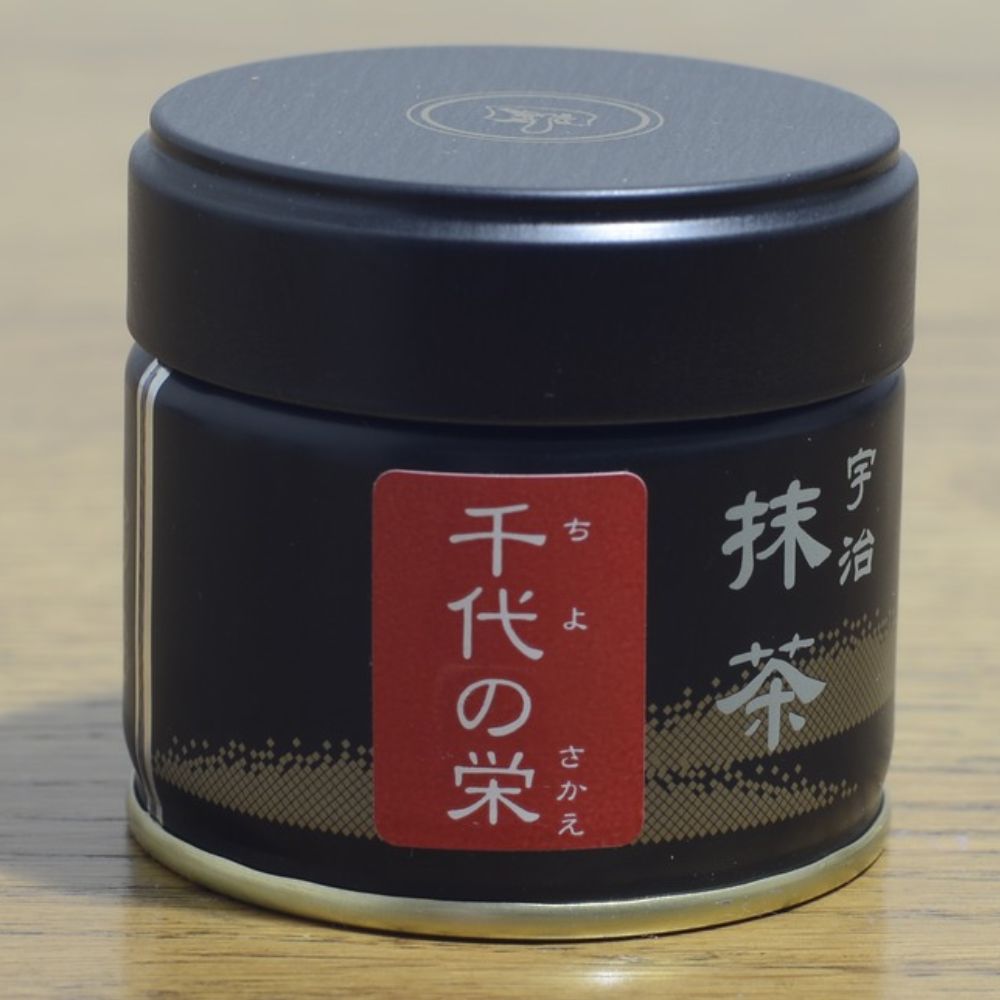
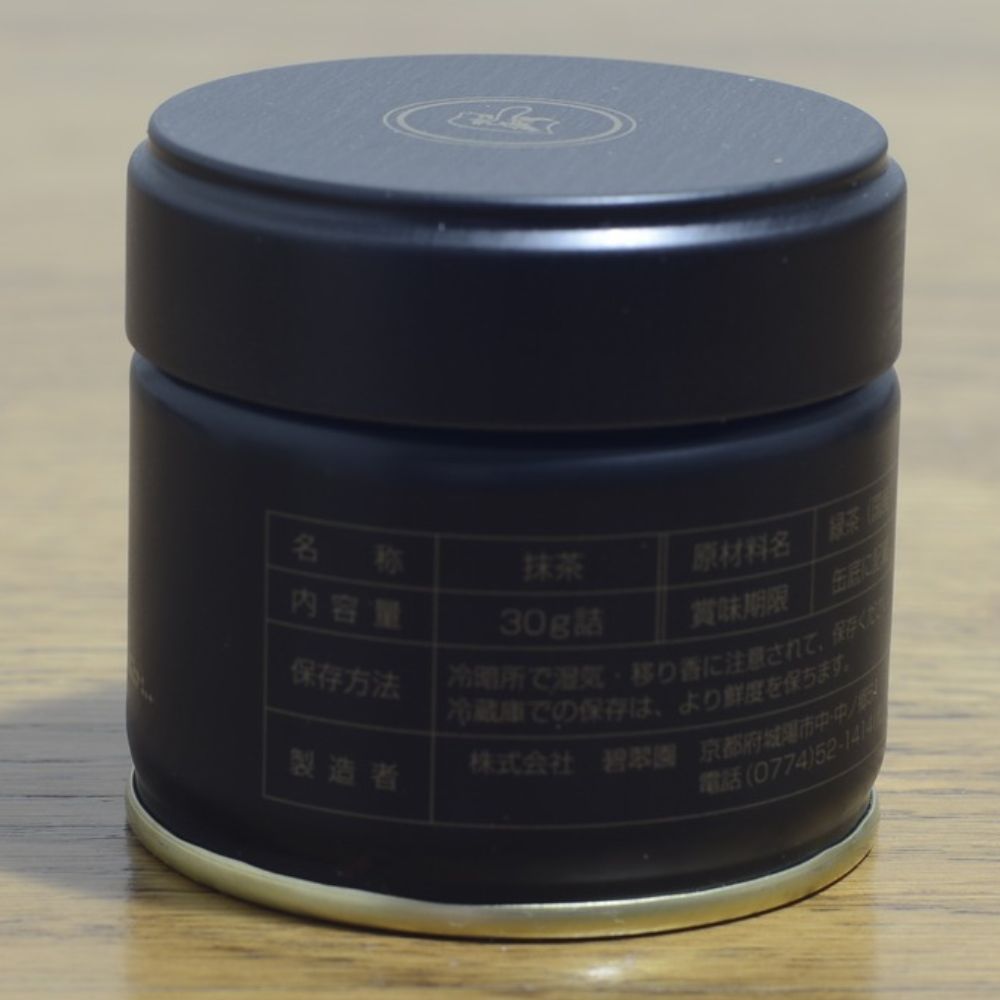
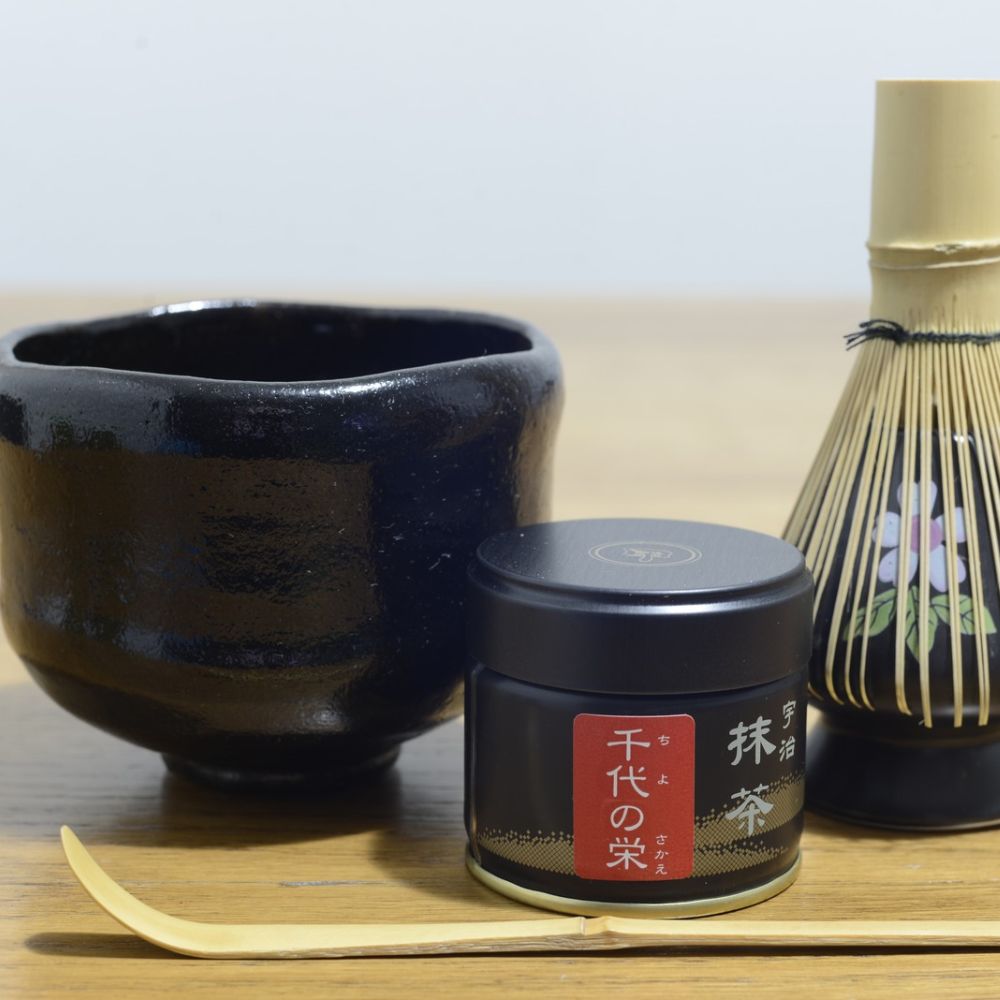
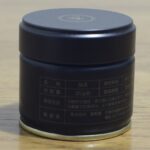
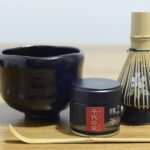
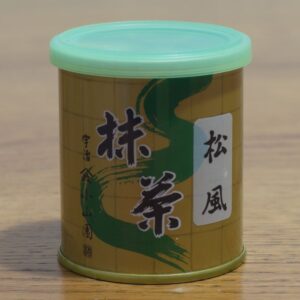
Hekisuien Chiyo no Sakae Matcha
Chiyo no Sakae is an approachable first harvest Uji matcha from Hekisuien, a Kyoto tea house founded in 1867.
It sits toward the everyday end of Hekisuien’s matcha range, but don’t mistake that for weak matcha.
Chiyo no Sakae is known for its bold, matcha-forward flavour. Compared with smoother and more delicate matchas, it has more noticeable vegetal character, savoury umami, bitterness and astringency.
That extra intensity is also what makes it particularly good with milk.
What does Chiyo no Sakae taste like?
Expect a bold and savoury matcha with a distinctly vegetal character.
Drinkers commonly describe notes of cacao, dark chocolate or coffee-like depth, alongside umami and a creamy undertone. There is noticeable bitterness and astringency, particularly when prepared with water, but these characteristics give Chiyo no Sakae enough presence to remain noticeable when milk is added.
Individual batches and preparation can change the experience, and some drinkers find it sweeter and creamier than others.
Taste profile
Umami: Medium
Sweetness: Low–medium
Bitterness: Medium
Astringency: Medium
Body: Medium
Intensity: High
Common notes: Vegetal • Cacao • Savoury umami • Creamy undertone
Is Chiyo no Sakae good for matcha lattes?
Yes. This is where Chiyo no Sakae really shines.
One of the most common things drinkers mention about Chiyo no Sakae is its ability to maintain its matcha flavour after milk is added.
Its stronger vegetal character, cacao-like depth and moderate bitterness help it cut through milk without requiring an excessive amount of matcha.
That makes it a good choice if you’ve ever made a matcha latte only to find that the matcha disappears once the milk goes in.
For a balanced latte, we recommend starting with:
2–2.5g matcha
30–40ml water
100–120ml milk
For a stronger café-style latte, try 3g of matcha with 120–150ml milk.
If you’re adding strawberry, syrups or other flavours, increasing the matcha to 3–4g can help maintain its presence.
Can you drink Chiyo no Sakae as usucha?
Absolutely.
Chiyo no Sakae isn’t simply a latte matcha. It is also made to be enjoyed as usucha, traditional thin matcha prepared with water.
Prepared traditionally, you’ll experience much more of its vegetal, savoury and cacao-like character than you would in a latte.
It is particularly suited to someone who enjoys matcha with more intensity and character, rather than looking for the softest or sweetest possible bowl.
How to prepare Chiyo no Sakae as usucha
Start with:
2g Chiyo no Sakae
60ml water
Around 80°C
Sift the matcha into your bowl, add the water and whisk briskly with a chasen until evenly suspended with a fine layer of foam.
You can adjust the water temperature and ratio to suit your taste.
Is Chiyo no Sakae suitable for koicha?
We recommend Chiyo no Sakae primarily for usucha and matcha lattes rather than koicha.
Koicha uses considerably more matcha and very little water, concentrating bitterness and astringency as well as umami.
If you’re specifically looking for matcha to prepare as thick koicha, we’d recommend choosing one of Hekisuien’s higher-grade matchas intended for koicha.
First harvest Uji matcha
Chiyo no Sakae is specified by Hekisuien as a first flush matcha from Uji.
First harvest tea leaves are picked during the first harvest period of the year and are highly valued for matcha production.
For Chiyo no Sakae, however, we think the most important thing is how it actually drinks: strong enough for milk, but good enough to drink with nothing but water.
About Hekisuien
Hekisuien is a historic Kyoto tea company founded in 1867.
Based in Jōyō, Kyoto, within the wider Uji tea region, Hekisuien produces a broad range of Uji teas and matcha, from accessible everyday teas through to matcha intended for traditional koicha preparation.
Chiyo no Sakae sits at the accessible end of that range.
That makes it a good introduction to Hekisuien and an especially practical choice for someone who drinks matcha regularly.
Who is Chiyo no Sakae for?
Choose Chiyo no Sakae if you:
- Make matcha lattes but still want to taste the matcha through the milk.
- Enjoy stronger vegetal and savoury matcha.
- Want something you can use for both lattes and traditional usucha.
- Prefer a little bitterness and astringency rather than an extremely soft matcha.
- Want an approachable entry into Hekisuien’s matcha range.
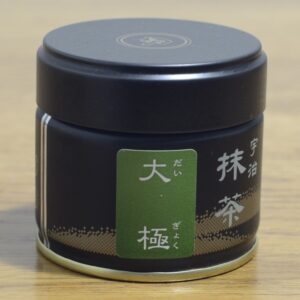
If your priority is a smoother, creamier and more refined bowl of usucha, consider Hekisuien Daigyoku instead.
Frequently Asked Questions
What does Hekisuien Chiyo no Sakae taste like?
Chiyo no Sakae is a bold Uji matcha with savoury umami, strong vegetal character and noticeable bitterness and astringency. Drinkers also commonly report cacao, dark chocolate or coffee-like depth with a subtle creamy quality.
Is Chiyo no Sakae good for lattes?
Yes. Chiyo no Sakae is particularly well suited to matcha lattes because its stronger flavour can remain noticeable after milk is added. Start with around 2–2.5g of matcha and 100–120ml of milk.
Is Chiyo no Sakae good for usucha?
Yes. Chiyo no Sakae can be prepared traditionally as usucha. It produces a stronger, more savoury bowl than matchas designed around delicate sweetness and very low bitterness.
Can Chiyo no Sakae be used for koicha?
Chiyo no Sakae is better suited to usucha and lattes. For traditional koicha, choose a matcha specifically intended for thick-tea preparation.
Is Chiyo no Sakae a first harvest matcha?
Yes. Hekisuien’s wholesale specification identifies Chiyo no Sakae as a first flush Uji matcha.
Where is Chiyo no Sakae from?
Chiyo no Sakae is made by Hekisuien in Kyoto, Japan, a tea company founded in 1867 and associated with the Uji tea region.
What is the difference between Chiyo no Sakae and Daigyoku?
Chiyo no Sakae has a bolder, more vegetal and punchy character, making it particularly suited to lattes and everyday usucha. Daigyoku is a step up in Hekisuien’s range, with a more balanced, creamy and refined character that makes it especially good for traditional usucha while still working well with milk.
Reviews
There are no reviews yet.